研究目的
To demonstrate a stable narrow-linewidth dual-wavelength single-longitudinal-mode (SLM) erbium-doped fiber laser using a microfiber knot resonator (MKR) and to explore its applications in optical communication and material processing.
研究成果
The proposed dual-wavelength SLM fiber laser, utilizing a MKR, demonstrates high potential for generating microwave signals for radio-over-fiber systems and wireless networks. It may be useful in various fields such as mode-division multiplexing (MDM), optical fiber communication, and material processing.
研究不足
The system's performance may be affected by environmental factors and detector noise, leading to fluctuations at lower frequencies. The linewidth limitation related to white noise prevents the laser linewidth from narrowing further.
1:Experimental Design and Method Selection:
The experiment involves the use of a MKR as an ultra-narrow band pass filter and a low-doped erbium-doped fiber (EDF) as a saturable absorber (SA) to achieve SLM operation.
2:Sample Selection and Data Sources:
A section of
3:56 m EDF is used as the gain medium, pumped by a 980 nm semiconductor laser. List of Experimental Equipment and Materials:
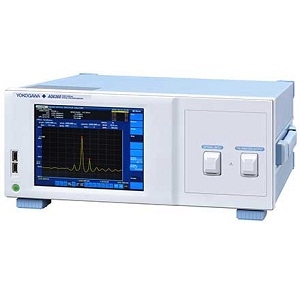
Includes a 980 nm/1550 nm wavelength division multiplexer, optical circulator, homemade 650 μm diameter MKR, unpumped EDF, common FBG, polarization controller, optical spectrum analyzer (OSA), and electrical spectrum analyzer (ESA).
4:Experimental Procedures and Operational Workflow:
The setup involves unidirectional oscillation of the laser, ultra-narrow band pass filtering using the MKR, and wavelength selection using the FBG.
5:Data Analysis Methods:
The linewidth of the SLM EDFL is measured using the delay self-homodyne method, and the frequency noise is measured using a laser noise measurement system.
独家科研数据包,助您复现前沿成果�,加速创新突破
获取完整内容