研究目的
To understand the thermo-mechanical behavior of the material during the manufacturing process for accurately predicting and efficiently controlling the formation of residual stresses and distortions in Laser Solid Forming (LSF) processes.
研究成果
The work presented is very challenging due to the joint use of thermocouples, IR imaging, displacement sensor and DIC system to develop a systematic in-situ thermo-mechanical field measurement platform. This in-situ system is used to monitor the thermo-mechanical evolution of the Ti-6Al-4V single-walls during the LSF process. At the same time, the in-house coupled 3D thermo-mechanical software is experimentally calibrated to analyze the thermo-mechanical behavior of LSF builds.
研究不足
The computational models typically used to study the AM process are quite limited because of the large amount of computational time required, the challenges of the experimental measurements necessary to calibrate and validate the numerical models and the lack of temperature-dependent material property data-bases to characterize the material behavior within the entire temperature range from the room temperature to (and above) the melting point.
1:Experimental Design and Method Selection
A fully coupled thermo-mechanical analysis to simulate the LSF process is carried out. Thermocouples, IR imaging, displacement sensors and DIC with optical filter are used to monitor the fabrication of LSF parts.
2:Sample Selection and Data Sources
A series of Ti-6Al-4V powder fed multilayer single-walls coupons are built on annealed Ti-6Al-4V substrates. The substrates are 140 mm long, 6 mm wide and 25 mm thick. Each single-wall is 80 mm long built by depositing 40 layers.
3:List of Experimental Equipment and Materials
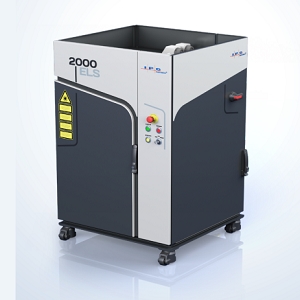
YLS-3000 IPG Photonics fiber laser, Omega GG-K-30 type K thermocouples, WXXY PM11-R1-20L Displacement Sensors, commercial DIC system with optical filters.
4:Experimental Procedures and Operational Workflow
The influence of the laser power, the scanning speed and the feeding rate on thermo-mechanical quantities such as temperature evolution and residual stresses is studied. The temperature evolution at different locations, as well as the distortions and both the stress and strain fields are measured.
5:Data Analysis Methods
The average percent error is computed for each thermocouple. The thermal and mechanical responses of single-wall coupons under different process parameters are recorded and compared with the numerical models.
独家科研数据包,助您复现前沿成果�����,加速创新突破
获取完整内容