研究目的
Investigating the fabrication and microstructural characterization of nanostructured Al2O3-ZrO2 eutectic layers via laser rapid solidification method.
研究成果
Nanostructured surface layers of Al2O3-ZrO2 eutectic were successfully produced via laser rapid solidification. The eutectic colonies consist of α-Al2O3, t-ZrO2 and m-ZrO2 phases, with the m-ZrO2 phase increasing with decreasing laser scanning velocity. The eutectic spacing is consistent with the inverse-square-root dependence on growth rate as predicted by the JH theory.
研究不足
The practical applications as the in situ surface nanostructuring process of engineering ceramics remain still unclear, which is limited to small surface area due to their brittleness and trapped bubbles induced at the advancing solidification front.
1:Experimental Design and Method Selection
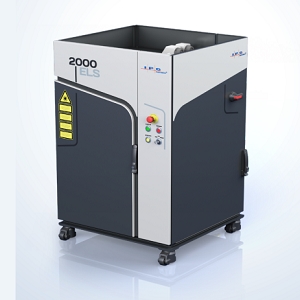
Laser surface remelting was performed using an IPG Ytterbium laser system under continuous wave mode to produce nanostructured Al2O3-ZrO2 eutectic layers.
2:Sample Selection and Data Sources
High-purity α-alumina and zirconia-20 wt.% alumina nanocomposite powders were used as starting materials. The Al2O3-ZrO2 powder mixture was hot pressed to produce consolidated samples.
3:List of Experimental Equipment and Materials
IPG Ytterbium laser system (YLS-2000), hot-pressing furnace (AVS50/250 type), field-emission scanning electron microscope (SEM, Helios Nanolab 600i), Invia Raman Spectroscopy (Renishaw).
4:Experimental Procedures and Operational Workflow
The sample was preheated to 500 °C, then the laser beam was linearly moved across the sample at various scanning velocities and laser powers. A continuous Argon flow was blown to protect the melted zone.
5:Data Analysis Methods
Microstructural evolution was examined by SEM equipped with EDS for compositional analysis. Raman spectra were recorded for phase identification. The surface geometry of molten pool and the eutectic spacing were evaluated with image processing and analysis system.
独家科研数据包���,助您复现前沿成果����,加速创新突破
获取完整内容