研究目的
Investigating the dynamic keyhole behavior and keyhole instability in high power fiber laser welding of stainless steel to understand weld defects formation and improve weld quality.
研究成果
The study concluded that keyhole width reaches quasi-steady state earlier than depth during fiber laser welding. Rear keyhole wall deformation and collapse are driven by recoil pressure and resisted by surface tension and hydrostatic pressure. Increased laser power leads to higher keyhole depth/width ratio, making the keyhole more capillary instable.
研究不足
The welding condition with the aid of transparent glass plate might be different from actual welding situation. The X-ray phase contrast imaging system is costly and not widely available.
1:Experimental Design and Method Selection:
A three-dimensional numerical model was developed, considering real-time multiple reflections of a laser beam, adiabatic bubble model, and shear stress. High-speed photography was used to observe keyhole behavior.
2:Sample Selection and Data Sources:
Stainless steel and heat resistant quartz glass were used. The experiments were performed with laser powers of 5 kW and 10 kW.
3:List of Experimental Equipment and Materials:
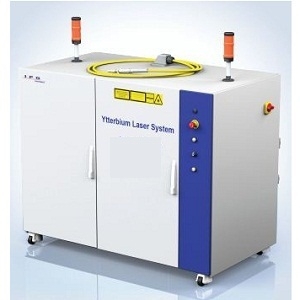
Fiber laser welding machine (IPG YLS-10,000), high-speed video camera, stainless steel plates, and quartz glass.
4:Experimental Procedures and Operational Workflow:
Laser welding was performed with specific parameters, and keyhole behavior was observed.
5:Data Analysis Methods:
Numerical simulation results were compared with experimental observations to analyze keyhole dynamics and instability.
独家科研数据包����,助您复现前沿成果�,加速创新突破
获取完整内容