研究目的
Investigating the effect of nickel foil thickness on microstructure and properties of DP980/6061 dissimilar laser welded joints, and the mechanism of nickel on microstructure of fusion zone, especially Fe–Al IMC.
研究成果
The addition of nickel foil promotes the d ! c phase transition, reduces d ferrite content, and changes the microstructure in weld seam and fusion line to full lath martensite when the nickel foil thickness is 0.30 mm. The NixAly IMC formed inhibits Fe–Al metallurgical reaction, reducing the thickness of Fe–Al IMC layer. Microhardness in weld seam increases with nickel foil thickness, while it decreases in the interface due to the soft NixAly IMC.
研究不足
The study focuses on the effect of nickel foil thickness on microstructure and microhardness, but does not extensively explore the mechanical properties or the weld's performance under operational conditions.
1:Experimental Design and Method Selection:
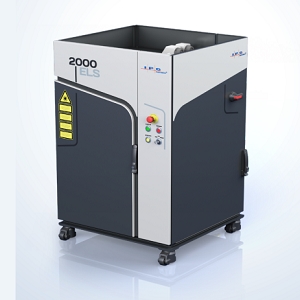
Laser lap welding between DP980 steel and 6061 aluminum alloy was carried out using IPG YLS-6000 fiber laser, with nickel foil of different thicknesses as interlayer.
2:Sample Selection and Data Sources:
Annealed DP980 steel and 6061-T6 wrought aluminum alloy were used.
3:List of Experimental Equipment and Materials:
IPG YLS-6000 fiber laser, nickel foil with thicknesses of
4:10, 20, and 30 mm, SEM for microstructure observation, EDS for element distribution and intermetallic compounds types determination, HV1000IS for hardness determination. Experimental Procedures and Operational Workflow:
The welding process involved placing the aluminum alloy on the steel with nickel foil in between, using different laser powers for different nickel foil thicknesses.
5:Data Analysis Methods:
Microstructure was observed by SEM, EDS was used for element distribution and intermetallic compounds types, and hardness was determined by HV1000IS.
独家科研数据包,助您复现前沿成果��,加速创新突破
获取完整内容