研究目的
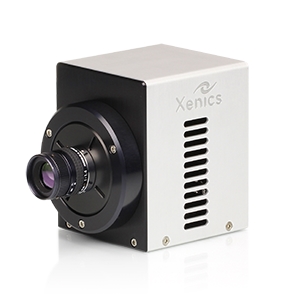
Comparing the temperature estimation results obtained from a visible and near-infrared hyperspectral line camera and a conventional short-wave infrared (SWIR) thermal camera during the laser melting and cladding of a 316L steel sample.
研究成果
Both the hyperspectral VNIR and SWIR thermal camera methods show agreeing results for the temperature distribution inside the melt pool, with the SWIR camera extending the temperature measurements beyond the melt pool boundaries into the solid region. The gray body simplification assumed for the SWIR measurements seems to hold but may result in a slight underestimation of the actual temperatures.
研究不足
The hyperspectral system is not sufficiently sensitive to the radiation coming from the lower temperatures outside the melt pool to provide reliable temperature estimations for these solid regions. The SWIR camera, while more suitable for measuring low temperatures, lacks spectral information, leading to less sophisticated temperature estimations.