研究目的
Investigating the epitaxy behavior and stray grains (SGs) formation in the deposit during epitaxial laser melting deposition (E-LMD) of directionally solidified (DS) superalloys.
研究成果
The study demonstrated the feasibility of repairing DS superalloys using E-LMD with cost-effective Inconel 718 polycrystalline powders. The deposit inherited the DS nature and orientation of the substrate through epitaxial growth. However, the formation of stray grains (SGs) at the interface was attributed to dynamic recrystallization (DRX) and the columnar to equiaxed transition (CET), which could deteriorate the properties of the deposit.
研究不足
The study focuses on the repair of DS Ni-based superalloys using E-LMD with Inconel 718 powders. The formation of stray grains (SGs) at the interface between the substrate and deposit is a limitation that affects the properties of the deposit.
1:Experimental Design and Method Selection:
The study involved the use of epitaxial laser melting deposition (E-LMD) to repair DS Ni-based superalloys using Inconel 718 powders. The process parameters were optimized for columnar dendrite growth.
2:Sample Selection and Data Sources:
Commercial Inconel 718 powders and DZ125 substrate were used. The powders were dried, and the substrates were prepared before E-LMD.
3:List of Experimental Equipment and Materials:
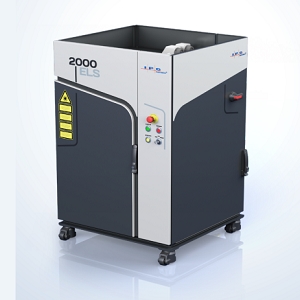
A 5 kW Ytterbium fiber laser, KUKA robot for path planning, MF-PF2/2 type automatic powder feeder, and coaxial nozzle (YC-52) were used. Argon was used as the carrier and shielding gas.
4:Experimental Procedures and Operational Workflow:
The laser beam moved along a line in the (001) crystal face. Thin-walled structure was generated by ten successive laser tracks.
5:Data Analysis Methods:
Microstructures were characterized using optical microscopy, scanning electron microscopy, and electron backscattered diffraction (EBSD). The deposit density was measured according to the Archimedes principle.
独家科研数据包���,助您复现前沿成果����,加速创新突破
获取完整内容