研究目的
Investigating the performance of a tunable external cavity diode laser (ECDL) based on the first excited states of two independent quantum dot (QD) ensembles.
研究成果
The study successfully demonstrates a high-power, narrow-linewidth ECDL based on the excited states of bimodal-sized QDs, with a tunable range of 28.9 nm and a linewidth of less than 0.2 nm. The findings suggest that carrier recombination in high energy states contributes to the excellent output characteristics. Future research could explore further optimizations of the QD ensemble and external cavity design.
研究不足
The study is limited by the technical constraints of the QD gain chip and the external cavity configuration, which may affect the tunable range and output power. Potential areas for optimization include the QD density and the external cavity design.
1:Experimental Design and Method Selection:
The study employs a Littrow configuration ECDL with a bimodal-sized InGaAs/GaAs QD laser as the gain medium. The design rationale focuses on utilizing the high degeneracy of excited states for improved output characteristics.
2:Sample Selection and Data Sources:
The epitaxial structure of the QD laser was grown by an AIXTRON 200-4 MOCVD system on an n-GaAs (001) substrate. The QD ensemble features a bimodal size distribution.
3:List of Experimental Equipment and Materials:
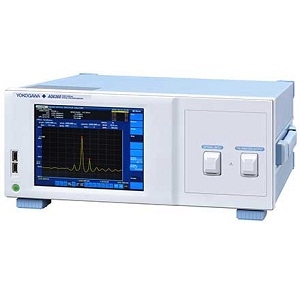
Key equipment includes a spectrum analyzer (YOKOGAWA, AQ6370D), a diffractive grating with a groove density of 1200 lines/mm, and an aspheric lens with a numerical aperture of 0.
4:Experimental Procedures and Operational Workflow:
6.
4. Experimental Procedures and Operational Workflow: The ECDL's output beam is collimated and directed towards a grating for wavelength selection and feedback. The tunable range and linewidth are measured under varying injection currents.
5:Data Analysis Methods:
The EL spectrum and output characteristics are analyzed to evaluate the performance of the ECDL, including tunable range, linewidth, and power output.
独家科研数据包�����,助您复现前沿成果�,加速创新突破
获取完整内容