研究目的
Investigating the microstructural characteristics of a laser metal deposition (LMD) processed AZ31 magnesium alloy to understand its potential for additive manufacturing applications.
研究成果
The study successfully demonstrated the feasibility of using AZ31 wire for additive manufacturing via LMD, producing pore-free structures with a fine-grained microstructure. The findings suggest that LMD-processed magnesium alloys exhibit unique microstructural characteristics compared to titanium and aluminium alloys, potentially expanding the application spectrum of both LMD and magnesium alloys in additive manufacturing.
研究不足
The study highlights the technical challenges of using magnesium alloys in additive manufacturing, such as flammability of powders and the need for parameter optimization to achieve defect-free structures. The research also notes the limitations in current CAD/CAM solutions for online correction of height offset parameters.
1:Experimental Design and Method Selection:
The study utilized laser metal deposition (LMD) with AZ31 magnesium wire to avoid the flammability issues associated with magnesium powders. Optical microscopy and scanning electron microscopy (SEM) were employed for microstructural analysis, alongside EDX and EBSD for chemical composition and microtexture analysis. Vickers micro hardness testing was used to assess local mechanical properties.
2:Sample Selection and Data Sources:
AZ31-HP sheet material was used as the substrate, with AZ31X wire from Drahtwerke Elisental for deposition. The chemical composition was verified using EDX analysis.
3:List of Experimental Equipment and Materials:
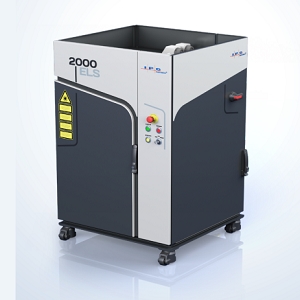
Equipment included an IPG Photonics YLS-8000 fibre laser, Dinse FDE 100 L wire feeder, and a JEOL JSM-6490LV scanning electron microscope for EDX and EBSD measurements.
4:Experimental Procedures and Operational Workflow:
The LMD process parameters were optimized for magnesium alloy deposition, focusing on power, defocusing, travel speed, wire feed rate, line spacing, and height offset. Microstructural and mechanical property analyses were conducted post-deposition.
5:Data Analysis Methods:
EDX spectra were assessed using standardless ZAF-correction method. Grain size and misorientation angles were analyzed to understand microstructural evolution and anisotropy.
独家科研数据包����,助您复现前沿成果�,加速创新突破
获取完整内容