研究目的
To investigate the effect of the excitation wavelength on the optical performances of quantum-dot-converted light-emitting diodes (QD-converted LEDs) and to provide a general guide for selecting a pumping source for QDs.
研究成果
The study concludes that blue light is recommended for exciting QDs from the perspective of energy utilization, while UV-excited QD LEDs have unique advantages in eliminating the original peaks from the LED chip and achieving higher color purity. A 117.5% (NTSC1953) color gamut could be obtained by the 365 nm-excited RGB system, which is 32.6% higher than by the 455 nm-excited solution. This research provides an understanding of the properties of QD-converted LEDs under different wavelength excitations and offers a general guide to selecting a pumping source for QDs.
研究不足
The study is limited to the comparison of QD-converted LEDs under different excitation wavelengths and does not explore the long-term stability or degradation of QDs under continuous operation. Additionally, the study focuses on CdSe-based QDs and may not be directly applicable to other types of QDs.
1:Experimental Design and Method Selection:
The study compared the performance of green and red QD LEDs at different excitation wavelengths (365, 385, 405, and 455 nm). The photoluminescence (PL) pattern of QD films was explored, and the optical performances of green and red LEDs were analyzed.
2:Sample Selection and Data Sources:
Green and red QDs were purchased from Beijing Beida Jubang Science & Technology Co., Ltd. The PDMS package material was purchased from Dow Corning Corporation, USA.
3:List of Experimental Equipment and Materials:
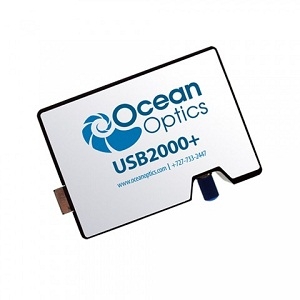
TEM images were taken by a transmission electron microscope (TEM, JEM-2100F, JEOL, Akishima, Japan). The PL spectrum was measured by a fluorescence spectrophotometer (RF-6000, Shimadzu, Kyoto, Japan). The absorption and transmission spectra were collected by a UV-vis spectrometer with an integrating sphere accessory (TU-1901, Persee, Beijing, China). The electroluminescence (EL) spectra and optical parameters of the LED devices were measured with a calibrated integrating sphere system, a spectrometer (USB2000+, Ocean Optics, Largo, FL, USA), and a power supply (Keithley 2425, Keithley Instruments & Products, Cleveland, OH, USA).
4:Experimental Procedures and Operational Workflow:
QD remote films for LEDs were prepared by mixing green CdSe/ZnS and red CdSe/ZnS/ZnS QDs with PDMS at mass concentrations of 0, 0.2, 0.5, 1.2, 3.0, and 7.0 wt%. The film was prepared using a designed mold, and the thickness was fixed at 500 μm by a gasket. After heating at 100 °C for 1 h, the mold was released to obtain QD films. Finally, the QD remote film was assembled to form LED samples with different excitation wavelengths.
5:2, 5, 2, 0, and 0 wt%. The film was prepared using a designed mold, and the thickness was fixed at 500 μm by a gasket. After heating at 100 °C for 1 h, the mold was released to obtain QD films. Finally, the QD remote film was assembled to form LED samples with different excitation wavelengths.
Data Analysis Methods:
5. Data Analysis Methods: The QD absorption rate, QD conversion efficiency, and energy conversion efficiency were calculated to analyze the optical performances of the QD-converted LEDs.
独家科研数据包���,助您复现前沿成果��,加速创新突破
获取完整内容