研究目的
Investigating a new method for the preparation of CsPbX3 (X ? Cl, Br, I) quantum dots by water-induced surface crystallization in tin ?uorophosphates glass.
研究成果
In summary, we have reported a new method for the preparation of CsPbX3 (X ? Cl, Br, I) QDs by water-induced surface crystallization in the glass. By changing the ratio of Cl/Br/I halogen elements in the raw material, a whole-family of CsPbX3 (X ? Cl, Br, I) QDs in tin ?uorophosphate glass can be obtained, which produces multicolor tunable emission from 414 nm to 713 nm. Besides, a plausible water-induced surface crystallization mechanism has been proposed, revealing the critical role of water in the transformation of amorphous to crystalline of CsPbX3 QDs. As a consequence, patterns were produced by depositing the glass powers on the substrates after humidi?er spray treatment, suggesting that this material technology may play a signi?cant role in the ?eld of safety materials and anti-counterfeiting technology shortly.
研究不足
The PLQY values of the sample is 24.3%, which is lower than other CsPbBr3 QDs in glass, probably due to the existence of defect states in QDs produced by surface crystallization.
1:Experimental Design and Method Selection:
A method for water-induced crystal growth is demonstrated to achieve the fabrication of CsPbX3 (X ? Cl, Br, I) QDs using glass as the precursor at room temperature. The precursor glass was obtained by applying the melt quenching technique.
2:Sample Selection and Data Sources:
The composition of glass was 30SnOe30SnF2e30P2O5e2Cs2CO3-2PbX2-6KX (X ? Cl, Br and I) (mol%).
3:List of Experimental Equipment and Materials:
All raw materials were mixed in proportion and added to the crucible, which were then placed in a muf?e furnace and melted at 400 (cid:2)C for 30 min. The melt was quenched on a preheated iron mold and then transferred to a muf?e furnace and annealed to room temperature. CsPbX3 QDs were obtained by placing the precursor glass or the powders of the glass in a humidity chamber with a relative humidity of 70% for 30 min.
4:Experimental Procedures and Operational Workflow:
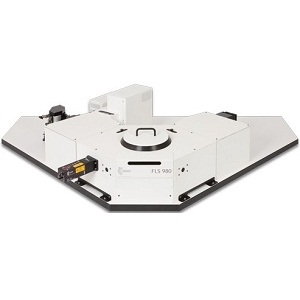
The powder X-ray diffraction (XRD) patterns of the samples were recorded by X-ray diffractometer with CuKa radiation (Bruker D8 advance, Germany) in the 2q range of 10e70(cid:2). Microstructure observations of the specimen were tested by using transmission electron microscope (TEM, JEOL, JEM-2100F, Japan), and the element distribution was analyzed by employing the TEM accessary energy dispersive spectrometer (EDS) system. The PL spectra and the emission decay were carried out by a high-resolution spectro?uorometer (Edinburgh Instruments FLS 920, UK). PLQY was determined by the spectro?uorometer equipped with an integrating sphere and a xenon lamp as the excitation source. The thermal-stability properties were also detected by the spectrophotometer, which is equipped with a computer-controlled heating attachment. The photo-stability test was performed on a sample irradiated by a 365 nm UV lamp (24 W) for different durations. The absorption spectra were recorded using a UVeVISeNIR spectrophotometer (PerkinElmer Lambda 950, USA) in the range of 300e800 nm. All measurements were carried out at room temperature.
独家科研数据包,助您复现前沿成果��,加速创新突破
获取完整内容