研究目的
To introduce and demonstrate the concept of super-resolution spectroscopy based on sparse sampling in the frequency domain using a random laser source, aiming to achieve spectral characterization of samples with features finer than the nominal resolution of the spectrometer.
研究成果
The study successfully demonstrates the feasibility of performing super-resolution spectroscopy using random lasers for sparse sampling in the frequency domain. The technique allows for the retrieval of spectral features below the resolution limit imposed by the spectrometer, offering a promising approach for high-resolution spectral analyses with a small footprint and low cost.
研究不足
The method's effectiveness is contingent on the chaotic variation of the illumination spectrum to ensure narrow line widths and uniform sampling over the emission band. The ultimate resolution limit is determined by the linewidth of the individual random laser modes.
1:Experimental Design and Method Selection:
The study employs a random laser in its chaotic regime for sparse sampling in the frequency domain to achieve super-resolution spectroscopy. The methodology involves numerical simulations followed by experimental validation using a custom-made etalon filter.
2:Sample Selection and Data Sources:
The test sample is a low-finesse Fabry–Perot (FP) etalon with a free spectral range (FSR) well below the spectral resolution of the measuring apparatus. The random laser is realized by suspending ZnO nanoparticles in a solution of Rhodamine 6G and ethanol.
3:List of Experimental Equipment and Materials:
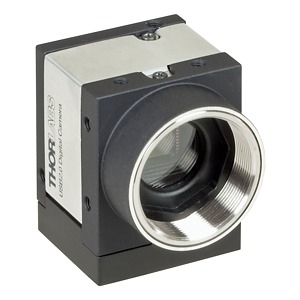
Includes a frequency-doubled Nd:YAG laser for optical pumping, a spectrometer with tunable resolution, a digital camera for data collection, and a custom-made FP etalon.
4:Experimental Procedures and Operational Workflow:
The random laser emission is split into reference and probe beams. The probe passes through the sample before being focused on a fiber entrance. The transmission spectrum is measured using a low-resolution spectrometer, and the data is analyzed to reconstruct the super-resolved spectrum.
5:Data Analysis Methods:
The analysis involves identifying isolated random laser modes, determining their center frequencies and amplitudes, and reconstructing the target spectrum by plotting their amplitudes as a function of frequency.
独家科研数据包����,助您复现前沿成果,加速创新突破
获取完整内容