研究目的
Investigating the physical similarity of the processes of laser thermochemical recording on thin metal films and modeling the recording of submicron structures.
研究成果
The study demonstrates that laser thermochemical recording on thin titanium films can be effectively modeled using physical similarity principles, allowing for the prediction of recording outcomes under different conditions. The findings highlight the potential for achieving ultra-high resolution in laser thermochemical recording.
研究不足
The study is limited by the assumptions of temperature invariance of thermophysical and optical coefficients of the film and substrate, and the focus on titanium films. The applicability to other materials and under varying temperature conditions is not explored.
1:Experimental Design and Method Selection:
The study involves laser thermochemical recording on thin titanium films using a cw Yb-fiber laser with varying power densities and spot sizes. The methodology includes theoretical modeling based on physical similarity principles.
2:Sample Selection and Data Sources:
Thin titanium films of different thicknesses (100 nm, 200 nm, and 300 nm) were used, deposited on BK7 glass substrates.
3:List of Experimental Equipment and Materials:
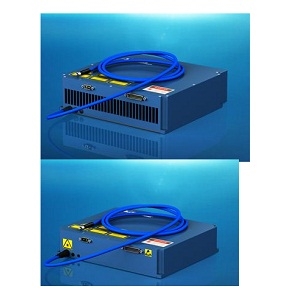
Equipment includes a cw Yb-fiber laser YLM-100, rotating mirrors for scanning, objectives for focusing, Gentec-EO Solo2 power meter, FLIR Titanium 520 M thermal camera, and Carl Zeiss Axio Imager A1.m optical microscope.
4:m optical microscope.
Experimental Procedures and Operational Workflow:
4. Experimental Procedures and Operational Workflow: The experiments involved recording oxide structures on titanium films with different laser parameters and measuring the optical contrast, temperature distribution, and transmittance.
5:Data Analysis Methods:
The data was analyzed to verify the physical similarity of processes under different recording conditions, focusing on the relationship between laser power density, spot size, and film thickness.
独家科研数据包��,助您复现前沿成果��,加速创新突破
获取完整内容