研究目的
Exploring the applicability of laser-induced incandescence to TiO2 nanoparticles in flame spray synthesis.
研究成果
The study demonstrated the applicability of laser-induced incandescence to TiO2 nanoparticles in flame spray synthesis, despite challenges such as high flame temperatures and the need to distinguish between incandescence and fluorescence signals. Future work will focus on in situ optical property measurements and time-resolved measurements for nanoparticle size monitoring.
研究不足
The study faced challenges in distinguishing the incandescence signal from the fluorescence signal due to their dependence on experimental conditions. The high temperature and particle concentration in the flame spray made optical measurements challenging. The threshold fluence for breakdown was dependent on matrix effects, limiting the range of applicable laser fluences.
1:Experimental Design and Method Selection:
The study used the laser-induced incandescence technique to investigate TiO2 nanoparticles in flame spray synthesis. Time-resolved spectral measurements were performed on nanoparticles deposited on a filter and in the flame spray at different heights above the burner and acquisition delay times.
2:Sample Selection and Data Sources:
TiO2 nanoparticles produced via flame spray pyrolysis were used. Nanoparticles were deposited on a glass fiber filter for ex situ measurements and directly in the flame for in situ measurements.
3:List of Experimental Equipment and Materials:
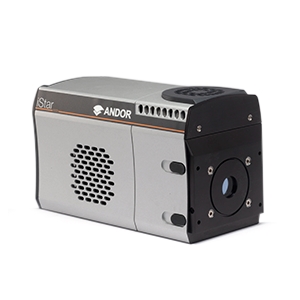
A pulsed Nd:YAG laser (Quanta System S.p.A.), spectrograph (Shamrock 303i), ICCD camera (iSTAR 334T, Andor Technology), high-pass and notch filters, and a calibrated deuterium lamp (Oriel) were used.
4:Experimental Procedures and Operational Workflow:
The fourth harmonic of the Nd:YAG laser was used to irradiate the nanoparticles. Spectral emissions were collected at different delay times and laser fluences. Measurements were performed with and without laser irradiation to discriminate laser-induced incandescence from flame emission.
5:Data Analysis Methods:
The spectral emission was corrected for the instrument function and particle emissivity and fitted by Planck's law to derive the incandescence temperature.
独家科研数据包�,助您复现前沿成果,加速创新突破
获取完整内容