研究目的
To investigate the crystal structures, energy transfer mechanisms, and tunable emissions of Eu3+-, Dy3+-, and Sm3+-activated Na3La(VO4)2 phosphors for the development of solid-state lighting and display systems.
研究成果
The Na3La(VO4)2 compound is an excellent host for activating the luminescence of Eu3+, Dy3+, and Sm3+ ions. The energy transfer from Dy3+ to Eu3+ is highly efficient, and the mechanism is dipole–dipole interactions. Tunable emissions from yellow to red can be achieved by controlling the Dy3+/Eu3+ concentration ratio, making these phosphors promising for solid-state lighting and display systems.
研究不足
The study focuses on the synthesis and luminescence properties of Na3La(VO4)2 phosphors doped with Eu3+, Dy3+, and Sm3+ ions, but does not explore the application in actual LED devices or the long-term stability of these phosphors under operational conditions.
1:Experimental Design and Method Selection:
The Na3La(VO4)2 and Na3La1-xMx(VO4)2 (M = Dy, Eu, or Sm; 0 ≤ x ≤
2:3) vanadate phosphors were synthesized using a solid state reaction process. Sample Selection and Data Sources:
Raw materials Na2CO3, NH4VO3, La2O3, Eu2O3, Dy2O3, and Sm2O3 were weighed and placed into an agate mortar.
3:List of Experimental Equipment and Materials:
XRD (DMAX2500 RIGAKU) with Cu Kα radiation (λ =
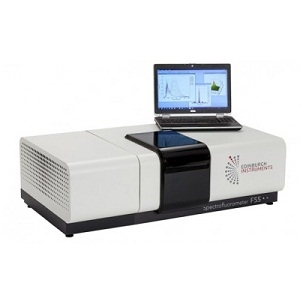
4:154 nm), SEM, and an Edinburgh Instruments FS5 spectrofluorometer with 150 W xenon lamps. Experimental Procedures and Operational Workflow:
The mixture was thoroughly ground for at least 30 min and loaded into an alumina crucible, then sintered in a box furnace at 850 °C for 5 h.
5:Data Analysis Methods:
The spectroscopic properties, including the photoluminescence (PL) and photoluminescence excitation (PLE) spectra and luminescence decay curve, were analyzed.
独家科研数据包,助您复现前沿成果���,加速创新突破
获取完整内容