研究目的
To investigate the possibility of using CF method combined with HRR LA-SIBS on quantitative elemental analysis of aluminum alloy samples.
研究成果
The study demonstrated that CF method combined with HRR LA-SIBS could be used to realize reliable quantitative elemental analysis of aluminum alloys samples. The technique is compact, cost-effective, and convenient for operation, making it a good replacement of CF-LIBS on the elemental analysis of different solid samples, especially alloy samples.
研究不足
The study focused on aluminum alloy samples and did not explore the application of CF HRR LA-SIBS on other types of samples. The technique's performance on samples with higher concentrations of minor elements or different matrices was not investigated.
1:Experimental Design and Method Selection:
The study utilized a compact fiber laser operated at 30 kHz pulse repetition rate for sample ablation and a compact fiber spectrometer for spectra recording in non-gated signal recording mode. Median filtering method was applied to reduce the contribution of the continuum background.
2:Sample Selection and Data Sources:
Three standard aluminum alloy samples were analyzed to evaluate the performance of this technique.
3:List of Experimental Equipment and Materials:
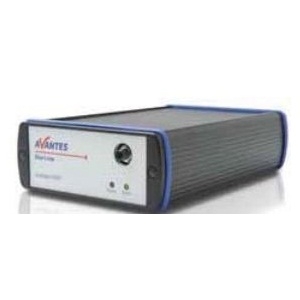
A compact fiber laser, a compact fiber spectrometer (Avantes, AvaSpec-ULS2048–3-USB2), and standard aluminum alloy samples were used.
4:Experimental Procedures and Operational Workflow:
The laser beam was focused on the sample surface to ablate the sample and produce a plasma. The spectra were recorded and processed to determine electron density and plasma temperature.
5:Data Analysis Methods:
The electron density was estimated from the Stark broadening of four ionic lines, and the plasma temperature was estimated from the Saha-Boltzmann plots.
独家科研数据包�����,助您复现前沿成果���,加速创新突破
获取完整内容