研究目的
Investigating the synthesis of monodispersed blue-emitting CsPbBr3 quantum dots in air ambience for white light emission applications.
研究成果
A facile ambient-air synthesis of strongly quantum-confined CsPbBr3 QDs with high-efficient blue emission at 460 nm through cutting CsPbBr3 NPLs was reported. The QDs with good monodispersity and high PLQY of 53.2% were easily prepared at room temperature. The CsPbBr3 QDs were used to prepare mixed phosphors emitting high quality white light, which gives a CIE 1931 color coordinates of (0.333, 0.311).
研究不足
The performance of blue-emitting CsPbBr3 nanocrystals is still inferior to their green counterpart. The synthesis generally demands high temperature and inert gas environment.
1:Experimental Design and Method Selection:
A top-down strategy combining re-precipitation technology with post-synthetic strategy, including ultrasonication and hydrobromic acid (HBr) treatment, was used to synthesize CsPbBr3 QDs.
2:Sample Selection and Data Sources:
CsPbBr3 nanoplatelets (NPLs) were synthesized via one-step antisolvent precipitation strategy.
3:List of Experimental Equipment and Materials:
Lead bromide (PbBr2), cesium carbonate (Cs2CO3), oleic acid (OA), oleylamine (OAm), toluene, acetone, hydrobromic acid (HBr), and hexane were used.
4:Experimental Procedures and Operational Workflow:
CsPbBr3 QDs were obtained by cutting NPLs with the assistance of HBr and ultrasonication treatment. The process involved injection of Cs-oleate precursor into PbBr2-precursor solution, addition of acetone as antisolvent, centrifugation, redispersion in hexane, addition of HBr, and ultrasonication.
5:Data Analysis Methods:
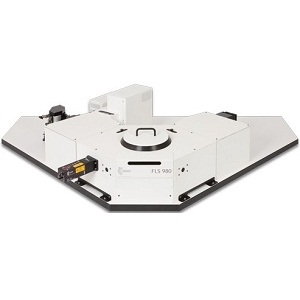
The optical properties were analyzed using UV-3600 spectrometer and fluorescence spectrometer (Edinburgh Instruments Ltd., FLS920). The PLQY was determined using quinine sulfate as a reference.
独家科研数据包�����,助您复现前沿成果�,加速创新突破
获取完整内容