研究目的
To explore the constituent elements of saindha salt using laser induced breakdown spectroscopy (LIBS) for its qualitative and quantitative analysis.
研究成果
The work demonstrated the feasibility of laser induced breakdown spectroscopy to determine the relative concentration of elements present in the sample. The spectroscopic analysis reveals the presence of Ca, Mg, Na, K, Fe, Sr, Si, Li and Al in the saindha salt. The electron temperature was determined by the Boltzmann plot method, while the electron number density was estimated from the Stark broadened line profile. Both the parameters were also studied as a function of laser irradiance and distance from the target sample. Among the three methods used, the quantitative performance of OLCF-LIBS was found to be better than the line intensity method and much better than SC-LIBS for the relative concentration measurement of saindha salt.
研究不足
The self-absorption effect can influence the accuracy of results. The self-absorption was evaluated using the internal reference method.
1:Experimental Design and Method Selection:
The third harmonic (355 nm) of a Q-switched Nd:YAG laser was used to produce the saindha salt plasma. The time integrated optical emission spectra were registered using a set of six miniature spectrometers covering the spectral range of 230–805 nm.
2:Sample Selection and Data Sources:
A small piece of saindha salt was crushed into a fine powder and pressed to form a pellet using a hydraulic press. The pellets of 4 mm thickness and 12 mm diameter were used for LIBS analysis.
3:List of Experimental Equipment and Materials:
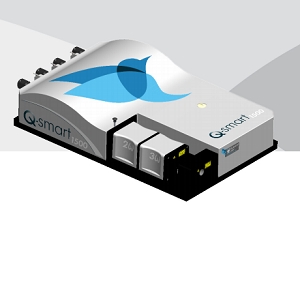
Q-switched Nd:YAG laser (Quantel, Q-Smart 850), operating at 355 nm with 5 ns pulse duration and 10 Hz repetition rate, capable of delivering 230 mJ pulse energy. The emission signal was corrected by subtracting the dark signal of the detector using OOILIBSplus software.
4:Experimental Procedures and Operational Workflow:
The salt pellet was irradiated with a 25 mJ laser pulse energy, which produced plasma on its surface, and the associated plasma light was collected and analyzed.
5:Data Analysis Methods:
The electron temperature was determined by the Boltzmann plot method, while the electron number density was estimated from the Stark broadened line profile.
独家科研数据包,助您复现前沿成果�,加速创新突破
获取完整内容