研究目的
To present a method based on feature extraction and machine learning algorithm for on-line quality monitoring and defects classification in laser welding processes.
研究成果
The method successfully applies ANN and SVM for automatic detection and classification of welding defects with low computational cost and high flexibility. ANN showed slightly better performance than SVM, but both have unique advantages. The method is promising for improving manufacturing efficiency by reducing unnecessary repairs.
研究不足
The method's effectiveness is dependent on the quality of the spectral data captured and the computational cost of processing high-dimensional data. The prediction accuracy may be affected by the similarity of data captured under different welding conditions due to sheet distortion.
1:Experimental Design and Method Selection:
The method involves capturing plasma radiation using an optical fiber probe and spectrometer, processing the spectral signal by selecting sensitive emission lines and extracting features of spectral data’s evolution for data compression. ANN and SVM are used for automatic detection and classification of welding defects.
2:Sample Selection and Data Sources:
Welding experiments were conducted on galvanized steel sheets with different gap conditions to simulate defects.
3:List of Experimental Equipment and Materials:
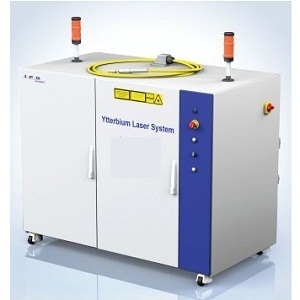
A fiber laser (YSL-6000), a KUKA six-axis robot (KR-60HA), an optical fiber probe with a COL-UV/VIS collimator, and an AvaSpec-ULS2048-8-USB2 multi-channel optical fiber spectrometer were used.
4:Experimental Procedures and Operational Workflow:
Spectral data was acquired at a sampling rate of 333 Hz during welding, processed by selecting sensitive emission lines and extracting features, and then used to train ANN and SVM models.
5:Data Analysis Methods:
The performance of ANN and SVM in classifying welding defects was compared based on prediction rates.
独家科研数据包�,助您复现前沿成果,加速创新突破
获取完整内容