研究目的
To present a cost-effective way of modifying a twisted nematic LCD screen that utilizes colored LEDs, allowing the measurement of animals’ sensitivity to, and discrimination between, wavelengths of light without requiring a-priori knowledge of animals’ photoreceptor classes.
研究成果
The modified TN LCD setup allows for greater control of the wavelengths and intensities of visual stimuli, improving upon traditional RGB light sources. It enables precise testing of the role of color in visually-guided behaviors and can also serve as an educational tool.
研究不足
Only two LED colors can be used at once, as using more would create color mixtures due to shared polarization directions. Additionally, the setup requires calibration with a spectrometer, and the contrast in the transmitted image decreases with viewing angle.
1:Experimental Design and Method Selection:
The study involved modifying a twisted nematic LCD screen by removing its back polarizer and backlighting it with LEDs of two different colors, each covered by polarizers with orthogonal transmission axes.
2:Sample Selection and Data Sources:
The setup was tested using LEDs with peak wavelengths of 470 nm (blue) and 525 nm (green).
3:List of Experimental Equipment and Materials:
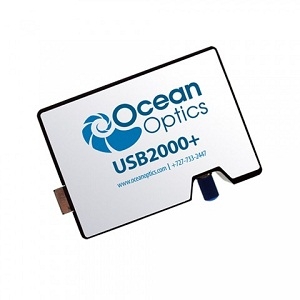
A Samsung LTM170EU-L11 LCD screen, LEDs (L1-0-B5TH30-1; L1-0-G5TH30-1), polarizers (Lee Filters), a potentiometer (model 3683S-1-102L, Bourns, Inc.), and a calibrated portable spectrometer (USB2000 with Spectrasuite software).
4:Experimental Procedures and Operational Workflow:
The screen was calibrated by adjusting the current through the LEDs to create dichromatic and monochromatic stimuli for testing color discrimination and sensitivity.
5:Data Analysis Methods:
Irradiance scans were made at the center of the screen using the spectrometer to measure the intensity and wavelength of the transmitted light.
独家科研数据包,助您复现前沿成果���,加速创新突破
获取完整内容