研究目的
To understand the behavior of melt pool during laser directed energy deposition (L-DED) for the prediction and control of process quality, focusing on the observation of melt pool cross sectional geometry and prediction of solidified grain orientation.
研究成果
The coaxial imaging system effectively observed melt pool characteristics in real-time, achieving high accuracy in predicting melt pool width and length. The melt pool shape was used to predict cross-sectional profiles of deposited tracks and crystal growth directions, showing good agreement with experimental data.
研究不足
The study focuses on the qualitative analysis of melt pool behavior rather than quantitative. The emissivity of the melt pool is uncertain, affecting temperature measurement accuracy. The method assumes a constant melt pool dimension for crystal growth direction prediction.
1:Experimental Design and Method Selection:
A coaxial imaging system was employed to observe the melt pool during a high deposition rate L-DED process. The image processing procedure, deposition track cross-sectional profile prediction, and the relationship between melt pool shape and dynamics were investigated.
2:Sample Selection and Data Sources:
Stainless steel (SS) 316L powder was used as the deposition material on SS 316L flat sheets.
3:List of Experimental Equipment and Materials:
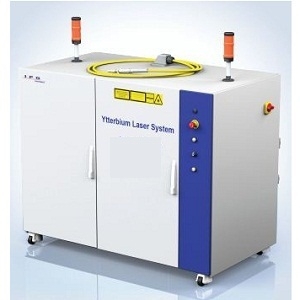
IPG YLS-16000 continuous wave fibre laser, Phantom Miro 4 camera, SULZER METCO TWIN 10-C powder feeder, and Keyence VHX-5000 digital microscope.
4:Experimental Procedures and Operational Workflow:
The laser beam was delivered through an optical fibre, focused, and used to deposit material. The melt pool was observed using coaxial and off-axial cameras, and images were processed to extract melt pool boundaries.
5:Data Analysis Methods:
The melt pool width and length were measured and compared with experimental data. The cross-sectional profiles of deposited tracks were predicted based on melt pool dimensions.
独家科研数据包�����,助您复现前沿成果��,加速创新突破
获取完整内容