研究目的
To improve the dye monolayer quality in dye-sensitized solar cells by covalently attaching a CDCA moiety to triarylamine sensitizers, ensuring a one-to-one ratio of dye and CDCA for better control over dye/additive distribution and enhanced photovoltaic performance.
研究成果
The covalent attachment of CDCA to triarylamine sensitizers improves the dye monolayer quality in DSSCs, leading to higher open-circuit voltage and power conversion efficiency. This approach ensures a one-to-one ratio of dye and CDCA, resulting in a more isotropic distribution and better control over the dye/additive composition. The best-performing device achieved a PCE of 6.84%, demonstrating the potential of this novel dye design concept.
研究不足
The study is limited by the modest molar extinction coefficients of the sensitizers, which result in less than optimal light harvest. Additionally, the optimal thickness of active TiO2 was found to be between 4 and 8 μm, suggesting that thicker layers may not significantly improve performance due to diffusion limitations.
1:Experimental Design and Method Selection:
The study involved the synthesis of triarylamine dyes with covalently attached CDCA moieties and their comparison with reference dyes without CDCA. The photophysical and electrochemical properties of these dyes were characterized, and their performance in DSSCs was evaluated.
2:Sample Selection and Data Sources:
The dyes were synthesized and characterized using UV–vis spectroscopy, cyclic voltammetry, and photovoltaic performance tests. The DSSCs were fabricated using these dyes with varying concentrations of CDCA as coadsorbent.
3:List of Experimental Equipment and Materials:
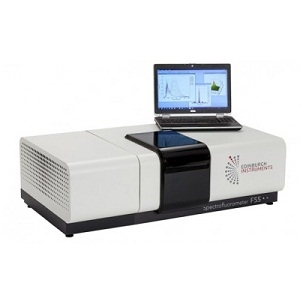
UV–vis spectrophotometer (Hitatchi U-1900), FS5 Spectrofluorometer (Edinburgh Instruments), Versastat 3 potentiostat (Princeton Applied Research), and solar simulator (Oriel xenon lamp, 300 W). Materials included TiO2 pastes from GreatCell Solar and electrolytes from Dyenamo.
4:Experimental Procedures and Operational Workflow:
The dyes were synthesized through a multi-step process, characterized, and then used to fabricate DSSCs. The photovoltaic performance was tested under 1 sun AM1.5 G illumination, and IPCE spectra were recorded.
5:5 G illumination, and IPCE spectra were recorded.
Data Analysis Methods:
5. Data Analysis Methods: The data from UV–vis, cyclic voltammetry, and photovoltaic tests were analyzed to determine the dyes' properties and their performance in DSSCs. The IPCE spectra were integrated to calculate the short-circuit current density.
独家科研数据包��,助您复现前沿成果����,加速创新突破
获取完整内容