研究目的
To develop a laser vision system (LVS) for real-time monitoring and prediction of weld quality in gas metal arc welding (GMAW) processes, including the measurement of external bead shapes and the prediction of internal bead shapes and tensile strengths of welded joints.
研究成果
The developed LVS system effectively measures external bead shapes and predicts internal bead shapes and tensile strengths in real-time. The camera calibration method significantly reduces measurement errors caused by the complex motion of the welding robot. The DNN models show high predictability for penetration, leg length, and tensile strength, with R2 values greater than 0.92. This study contributes to the automation of welding processes and the advancement of nondestructive testing (NDT) technology in the automotive industry.
研究不足
The prediction models are limited to the specific materials and welding conditions used in the study. Future work will focus on expanding the database to include various materials and welding conditions to enhance the models' applicability.
1:Experimental Design and Method Selection:
Designed and fabricated a laser vision sensor (LVS) based on the principle of laser triangulation. Developed an image processing algorithm for precise laser line extraction and a camera calibration method using a gyro sensor to cope with the complex motion of the welding robot.
2:Sample Selection and Data Sources:
Conducted GMA welding experiments on uncoated HR steel plates with a 590 MPa grade in lap-joint configurations at various welding conditions, including welding position, wire feeding speed, and gaps between steel plates.
3:List of Experimental Equipment and Materials:
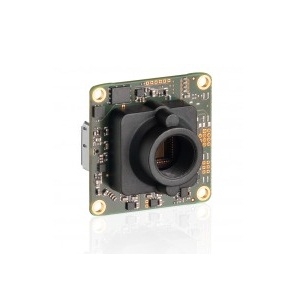
Used a camera (UI-3271LE-M-GL-VU, IDS Imaging Development Systems GmbH), a customized blue-line laser (405 nm, 50 mW), a motion processing unit (MPU-6050, TDK Corporation), and an industrial robot (IRB 2400, ABB Group).
4:Experimental Procedures and Operational Workflow:
Installed the LVS 50 mm above the specimen to receive reflected laser light, designed a light barrier to prevent arc light from directly entering the camera, and carried out welding experiments with the industrial robot.
5:Data Analysis Methods:
Developed deep neural network (DNN) models to predict internal bead shapes and tensile strengths based on external bead shape and welding condition data.
独家科研数据包,助您复现前沿成果�,加速创新突破
获取完整内容