研究目的
To characterize the microstructure and mechanical behavior of laser-welded TRIP steel after uniaxial tensile and Erichsen formability tests.
研究成果
Laser-welded TRIP 750 steel sheets exhibit sufficient weldability and mechanical behavior for forming operations, with the fusion and heat-affected zones being almost completely martensitic. The welded components showed good toughness, with fractures occurring in the base material away from the weld.
研究不足
The study focused on a specific type of steel (TRIP 750) and a particular welding method (laser welding). The results may not be directly applicable to other materials or welding techniques.
1:Experimental Design and Method Selection:
The study involved laser welding of TRIP 750 steel sheets under different conditions to analyze their impact on microstructure, hardness, and mechanical strength. The laser power was fixed at 900 W and the weld speed at 50 mm/s as the optimal parameters.
2:Sample Selection and Data Sources:
TRIP 750 steel sheets with a thickness of
3:6 mm were used. The chemical composition was provided by the steelmaker. List of Experimental Equipment and Materials:
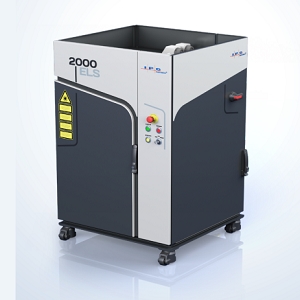
A 2-kW power fiber laser from IPG Photonics, model YLR-2000, was used for welding. Vickers hardness tests were performed with a Future Tech microdurometer model FM
4:Tensile tests were conducted on an Instron model DL000 universal testing machine. Experimental Procedures and Operational Workflow:
7 The welding process was carried out with argon shielding gas. After welding, samples were prepared for microstructural analysis and mechanical testing.
5:Data Analysis Methods:
Microstructural analysis was performed using optical and scanning electron microscopy. Hardness profiles and tensile properties were measured and analyzed.
独家科研数据包�����,助您复现前沿成果�,加速创新突破
获取完整内容