研究目的
Investigating the reduction of propagation loss in electrospun polymer fibers through thermal drawing.
研究成果
Thermal drawing of electrospun PDLLA fibers significantly reduces their diameter, fluctuations in diameter, and propagation loss. This method is promising for the fabrication of low-loss electrospun fiber waveguides for small optical devices.
研究不足
The study is limited to PDLLA fibers, and the applicability to other polymer fibers or functional composite fibers is not explored. The propagation loss reduction is significant but further optimization may be needed to achieve lower losses.
1:Experimental Design and Method Selection:
The study employed thermal drawing of electrospun polymer fibers to reduce propagation loss. The method involved heating the fibers above their glass transition temperature and mechanically drawing them.
2:Sample Selection and Data Sources:
Poly(lactic acid) (PDLLA) fibers were used due to their amorphous nature and high visible light transparency.
3:List of Experimental Equipment and Materials:
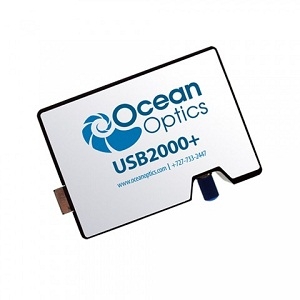
A field-emission scanning electron microscope (FESEM, SU8000, Hitachi) for morphological measurements, a laser (CPS520, Thorlabs Inc.) for waveguiding measurements, and a spectrometer (USB4000, Ocean Optics, Inc.) for intensity measurements.
4:Experimental Procedures and Operational Workflow:
Electrospun PDLLA fibers were thermally drawn fivefold at 55±2 °C, and their propagation loss and morphological properties were measured before and after drawing.
5:Data Analysis Methods:
The propagation loss was evaluated using an exponential function fitting the guided light intensity versus propagation length data.
独家科研数据包�����,助您复现前沿成果��,加速创新突破
获取完整内容