研究目的
To demonstrate an optoelectronic artificial neuron model based on nonlinear polarization rotation in a semiconductor optical amplifier that can perform sigmoid transfer function.
研究成果
The proposed optoelectronic neuron model closely resembles the continuous sigmoidal neuron, providing a new possibility to achieve artificial neural networks. The response of the neuron to excitatory and inhibitory inputs can be adjusted by the initial SOP, bias current, and power of probe beam.
研究不足
The excitatory and inhibitory inputs should be limited to a certain range to prevent the output from not remaining constant but decreasing or increasing. The phase noise of SOA may cause fluctuations on the SOP, which is neglected in the theory model.
1:Experimental Design and Method Selection:
The experiment involves the use of a semiconductor optical amplifier (SOA) to mimic the behavior of a continuous sigmoidal neuron through nonlinear polarization rotation (NPR). The setup includes optical injection for excitatory inputs and electrical modulation for inhibitory inputs.
2:Sample Selection and Data Sources:
The probe beam and pump beam are used as inputs, with their power and polarization states adjusted to study the NPR effect.
3:List of Experimental Equipment and Materials:
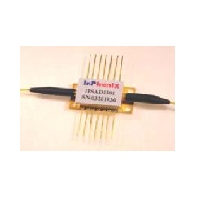
The setup includes laser diodes (LD1 and LD2), a wavelength division multiplexer (WDM), SOA, polarization controllers (PC1 and PC2), band-pass filter (BPF), polarization beam splitter (PBS), and a polarization analyzer (PA).
4:Experimental Procedures and Operational Workflow:
The SOP of the probe beam is adjusted using polarization controllers, and the response of the neuron to excitatory and inhibitory inputs is measured by varying the bias current, optical injection power, and initial SOP.
5:Data Analysis Methods:
The rotation angle induced by bias current and optical injection is analyzed to understand the NPR effect and its impact on the neuron's output.
独家科研数据包�,助您复现前沿成果,加速创新突破
获取完整内容