研究目的
Developing a dual-functional fluorescent probe for the detection of fluoride ion (F-) and hydrazine (N2H4) with high selectivity and sensitivity, and applying it in environmental monitoring and living cells imaging.
研究成果
The developed fluorescent probe 1 exhibits high sensitivity and selectivity for the dual-detection of F- and N2H4, with applications in environmental monitoring and living cells imaging. The home-made test strips and confocal fluorescence imaging demonstrate its practical utility and potential for further biological applications.
研究不足
The probe's application is limited to specific environmental and biological systems, and its performance may vary under different conditions. Further optimization is needed for broader applications.
1:Experimental Design and Method Selection:
The probe was designed based on nucleophilic aromatic substitution reaction for N2H4 detection and selective cleavage of 4-nitrobenzenesulphonyl group for F- determination.
2:Sample Selection and Data Sources:
PC12 cells were used for living cells imaging.
3:List of Experimental Equipment and Materials:
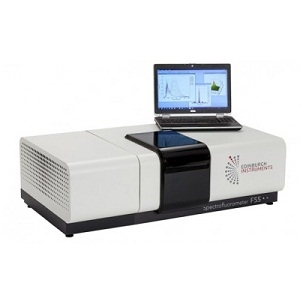
Instruments included Edinburgh FS5 spectrofluorometer, U-4100 UV-vis spectrophotometer, Bruker ESQUIRE HPLC-MS AB 4000Q, and Zeiss LSM710 confocal laser scanning microscope. Materials included 4-nitrobenzenesulfonyl chloride, tetrabutylammonium fluoride (TBAF), and 4-methylumelliferone.
4:Experimental Procedures and Operational Workflow:
Synthesis of probe 1, preparation of spectroscopic experimental samples, cell culture, cytotoxicity experiments, and confocal fluorescence imaging.
5:Data Analysis Methods:
Fluorescence spectra were analyzed to determine the limits of detection for F- and N2H4.
独家科研数据包�,助您复现前沿成果,加速创新突破
获取完整内容