研究目的
To propose and investigate an in-line fiber Mach–Zehnder interferometer for refractive index sensing, including simultaneous measurement of refractive index and temperature to eliminate cross-sensitivity.
研究成果
The peanut-shape structure in-line fiber MZI is effective for high-sensitivity RI sensing, with the ability to perform simultaneous RI and temperature measurements to mitigate cross-sensitivity. It offers advantages of compact size, low cost, and ease of fabrication, making it suitable for applications in chemical, biological, and medical fields.
研究不足
The sensor's performance may be affected by environmental factors beyond RI and temperature, such as mechanical stress or humidity. The fabrication process relies on precise control with the fusion splicer, which could introduce variability. The model assumes no reflections or energy loss, which might not hold in all cases.
1:Experimental Design and Method Selection:
The interferometer was designed using cascaded peanut-shape structures in a single-mode fiber, fabricated with a commercial fusion splicer. A model was used for simulation of mode coupling and power distribution.
2:Sample Selection and Data Sources:
G652D single-mode silica fiber was used. Solutions with varying refractive indices (
3:33–37) were prepared using glycerin. List of Experimental Equipment and Materials:
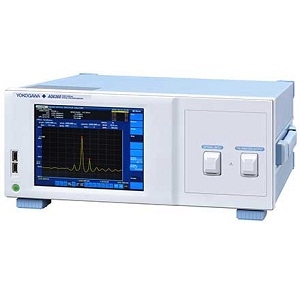
Broadband optical source (Opeak 1550 nm), optical spectrum analyzer (YOKOGAWA AQ6370D), fusion splicer (Fujikura 80S), single-mode fiber (G652D).
4:Experimental Procedures and Operational Workflow:
Fabricated interferometers with arm lengths of 30 mm and 100 mm. Measured interference spectra using the OSA while varying RI and temperature (25–60 °C).
5:Data Analysis Methods:
Used fast Fourier transform (FFT) for spatial frequency analysis, linear regression for sensitivity calculations, and matrix methods for simultaneous measurement.
独家科研数据包��,助您复现前沿成果���,加速创新突破
获取完整内容