研究目的
To generate and characterize a high-coherence visible supercontinuum source using an air-suspended-core photonic crystal fiber pumped by a femtosecond laser for applications in biology, chemistry, and medicine.
研究成果
A high-coherence visible femtosecond supercontinuum is successfully generated with a conversion efficiency of 29% and coherence above 0.8 after accounting for measurement artifacts. This source is promising for applications requiring coherent broadband visible light in biological, chemical, and medical fields.
研究不足
The coherence measurement is affected by the multimode interference from the Ocean-optics spectrometer's pigtail fiber, degrading the measured coherence. The SC spectrum beyond 1100 nm is not observed due to weak signal, and the fiber length optimization is limited by attenuation effects.
1:Experimental Design and Method Selection:
The study involves generating supercontinuum (SC) in a borosilicate glass air-suspended-core photonic crystal fiber (PCF) using an 800-nm Ti:sapphire femtosecond laser. The coherence of the SC is measured using a Michelson interferometer based on spectral interference principles.
2:Sample Selection and Data Sources:
A home-made PCF with specific dimensions (core diameter
3:7 μm, cladding diameter 160 μm, etc.) fabricated using Schott N-BK7 glass via a sheet-stacking method is used. The pump source is a commercial Ti:
sapphire laser.
4:List of Experimental Equipment and Materials:
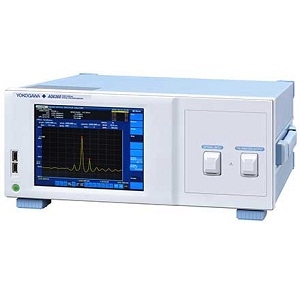
Equipment includes a Ti:sapphire laser (Astrella, Coherent Inc.), Michelson interferometer, optical spectrum analyzer (OSA, YOKOGAWA AQ6370C), Ocean-optics spectrometer, and the fabricated PCF. Materials include borosilicate glass (Schott N-BK7).
5:7). Experimental Procedures and Operational Workflow:
4. Experimental Procedures and Operational Workflow: The laser pumps the PCF, and the output SC is analyzed for spectrum and coherence. Coherence is measured by sending the SC to a Michelson interferometer, tuning the arm lengths to observe interference fringes, and calculating coherence using fringe visibility.
6:Data Analysis Methods:
Spectral data is collected using OSA and Ocean-optics spectrometer. Coherence is calculated from interference fringes using equations for visibility and mutual coherence, with statistical analysis of standard deviations.
独家科研数据包�,助您复现前沿成果,加速创新突破
获取完整内容