

研究目的
Investigating the tuning of photophysical properties of carboranyl luminophores through closo- to nido-carborane conversion and their application as OFF–ON fluorescent sensors for fluoride anions.
研究成果
The conversion from closo- to nido-carborane significantly enhances fluorescence due to intramolecular charge transfer, enabling highly selective and sensitive OFF–ON fluorescence sensing of fluoride anions. This provides a foundation for developing new fluorescent sensors based on carborane chemistry.
研究不足
The deboronation reaction is sluggish at room temperature, requiring elevated temperatures (60°C) for fluoride sensing, which may limit real-time applications. Selectivity was tested against common anions but not exhaustively for all possible interferents. Theoretical calculations used specific functionals and basis sets, which may not capture all electronic effects accurately.
1:Experimental Design and Method Selection:
The study involved synthesizing closo-carborane-appended luminophores and converting them to nido-carboranyl forms via deboronation with fluoride. Photophysical, electrochemical, and theoretical methods were used to characterize properties and mechanisms.
2:Sample Selection and Data Sources:
Samples included synthesized closo-OXD1–2, closo-DPS1–2, and their nido counterparts. Data were obtained from NMR spectroscopy, elemental analysis, X-ray crystallography, cyclic voltammetry, UV/Vis absorption, photoluminescence spectroscopy, and theoretical calculations.
3:List of Experimental Equipment and Materials:
Equipment included Bruker NMR spectrometer, elemental analyzer, melting point apparatus, Autolab/PGSTAT 101 system for cyclic voltammetry, Varian Cary 100 and HORIBA FluoroMax-4P spectrophotometers, Hamamatsu Quantaurus-QY C11347-11 for quantum yields, Edinburgh Instruments FS5 spectrophotometer for lifetime measurements, and Gaussian 16 for DFT calculations. Materials included decaborane, diethyl sulfide, n-tetrabutylammonium fluoride, THF, DMF, MeCN, and various chemicals for synthesis.
4:Experimental Procedures and Operational Workflow:
Synthesis involved reactions under nitrogen atmosphere, purification by column chromatography, and characterization. Photophysical measurements were done in THF solutions and PMMA films. Electrochemical studies used a three-electrode cell. Theoretical calculations optimized geometries and transitions using DFT and TD-DFT methods.
5:Data Analysis Methods:
Data were analyzed using NMR software, electrochemical analysis software, spectrophotometer software, and Gaussian 16 with AOMix for molecular orbital analysis.
独家科研数据包,助您复现前沿成果,加速创新突破
获取完整内容-
NMR Spectrometer
Bruker 300 AM
Bruker
Recording NMR spectra for characterization of compounds
暂无现货
预约到货通知
-
Elemental Analyzer
Flash 2000
Thermo Scientific
Performing elemental analysis
暂无现货
预约到货通知
-
Cyclic Voltammetry System
Autolab/PGSTAT 101
Autolab
Performing electrochemical studies
暂无现货
预约到货通知
-
Photoluminescence Spectrophotometer
FluoroMax-4P
HORIBA
Recording photoluminescence spectra
暂无现货
预约到货通知
-
Quantum Yield Measurement System
Quantaurus-QY C11347-11
Hamamatsu Photonics
Measuring absolute photoluminescence quantum yields
暂无现货
预约到货通知
-
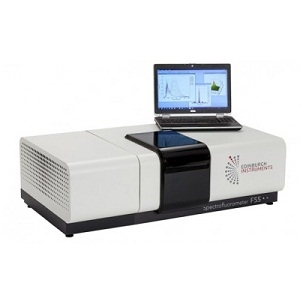
Spectrophotometer
FS5
Edinburgh Instruments
Measuring emission lifetimes using time-correlated single-photon counting
 立即获取同款设备
 -
X-ray Diffractometer
Bruker SMART Apex II CCD
Bruker
Measuring X-ray diffraction for crystal structure determination
暂无现货
预约到货通知
-
Melting Point Apparatus
SMP30
Stuart Equipment
Measuring melting points of compounds
暂无现货
预约到货通知
-
UV/Vis Spectrophotometer
Cary 100
Varian
Recording UV/Vis absorption spectra
暂无现货
预约到货通知
-
Computational Software
Gaussian 16
Gaussian
Performing DFT and TD-DFT calculations
暂无现货
预约到货通知
-
Molecular Orbital Analysis Program
AOMix
University of Ottawa
Analyzing compositions of molecular orbitals
暂无现货
预约到货通知
-
登录查看剩余9件设备及参数对照表
查看全部



