研究目的
To expand the Z-directional measurement range of a fiber-based dual-detector chromatic confocal probe with a mode-locked femtosecond laser source by utilizing the main-lobe and side-lobes of axial responses.
研究成果
The proposed method successfully expanded the measurement range of the fiber-based dual-detector chromatic confocal probe from 40 μm to 250 μm without any modification on the optical setup. The feasibility of the method was demonstrated through theoretical calculations and experiments.
研究不足
The method requires setting a defocus d to be 110 μm to make the side-lobes visible and identifiable, which may affect the axial resolution. Future research will focus on 3D microstructure imaging, depth measurement provided by the optical phase and optical complex amplitude, and measurement uncertainty analysis.
1:Experimental Design and Method Selection:
The method involves using a dual-detector chromatic confocal probe with a mode-locked femtosecond laser source. The axial responses from the normalized intensity ratio and the invert normalized intensity ratio are analyzed to expand the measurement range.
2:Sample Selection and Data Sources:
A plane mirror mounted on a one-axis piezoelectric (PZT) positioning stage was used as the measurement target. The displacement of the mirror was measured by a capacitive displacement sensor.
3:List of Experimental Equipment and Materials:
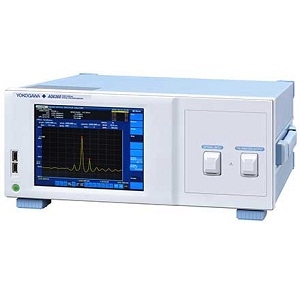
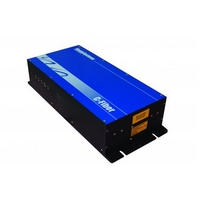
Mode-locked femtosecond laser (C-Fiber, MenloSystems), single-mode step index fibers, optical spectrum analyzer (AQ6370D, Yokogawa Electric Corp.), polarized beam splitter (PBS), quarter wave plate (QWP), chromatic objective (Edmund Optics, #67-484), achromatic lenses, and a precision manual stage system.
4:Experimental Procedures and Operational Workflow:
The plane mirror was moved along the Z-direction in steps of 2 μm to obtain axial responses. Peak wavelengths were calculated from the centroid positions of the corresponding normalized intensity ratio and the invert normalized intensity ratio at each Z-position of the mirror.
5:Data Analysis Methods:
The relationship between the peak wavelength and the axial Z-directional displacement was investigated by extracting the peak wavelengths in the normalized intensity ratio and the invert normalized intensity ratio.
独家科研数据包�����,助您复现前沿成果���,加速创新突破
获取完整内容