研究目的
To demonstrate a compact and stable room-temperature multiwavelength erbium doped fiber laser by employing 45° tilted fiber gratings based on an all-fiber polarization interference filter.
研究成果
The study successfully demonstrates a compact and stable room-temperature multiwavelength erbium doped fiber laser using an all-fiber polarization interference filter. The laser achieves over 80 wavelengths within a 3 dB bandwidth, with a linewidth of 0.03 nm and an SNR of 33 dB. The wavelength spacing can be flexibly controlled by adjusting the filter length, offering a practical solution for generating uniform and stable multiwavelength lasers.
研究不足
The study is limited by the need for precise adjustment of the polarization controllers to achieve stable multiwavelength operation. Additionally, the use of SMF instead of HNLF, while reducing splice loss, may limit the nonlinearity available for some applications.
1:Experimental Design and Method Selection:
The experiment employs an all-fiber polarization interference filter (AFPIF) formed by sandwiching a segment of PM fiber between two 45° tilted PM fiber gratings. This setup is used to generate a comb-like transmission spectrum and a linear polarization output.
2:Sample Selection and Data Sources:
The gain medium is a 2 m long EDF, pumped by a 980 nm laser diode. The initial length of the SMF in the laser cavity is around 11 m, and kilometers of SMF are used to provide the nonlinear phase shift.
3:List of Experimental Equipment and Materials:
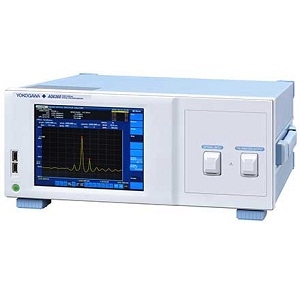
Equipment includes a three-in-one device for wavelength division multiplexing, an isolator, and a coupler with a 5% output, two polarization controllers (PCs), and an optical spectrum analyzer (OSA, Yokogawa AQ6370D).
4:Experimental Procedures and Operational Workflow:
The multiwavelength lasing operation is achieved by adjusting the PCs at a pump power of 700 mW. The performance is tested with different lengths of SMF and EDF to optimize the output.
5:Data Analysis Methods:
The output spectrum is analyzed for wavelength count, linewidth, and signal-to-noise ratio (SNR) using the OSA.
独家科研数据包����,助您复现前沿成果,加速创新突破
获取完整内容