研究目的
Investigating the improvement of speckle reduction efficiency in laser projection systems using refractive optical elements (ROEs) with a staircase-like structure.
研究成果
The study demonstrates that introducing refractive optical elements (ROEs) with a staircase-like structure before a holographic diffuser can effectively reduce speckle contrast in laser projection systems. The method is motionless and simpler compared to other speckle reduction techniques. Future work includes fabricating ROEs with smaller cell dimensions using microfabrication processes to further optimize speckle reduction efficiency.
研究不足
The study notes that the efficiency of speckle reduction improvement using ROEs degenerates when the working numerical aperture and the length of the light pipe are increased. Additionally, about 20% optical power is lost after introducing the ROEs due to reflections and defects in the glass assembling process.
1:Experimental Design and Method Selection:
The study involves the use of proof-of-concept refractive optical elements (ROEs) with a staircase-like structure to split a laser beam into sub-beams with different optical paths.
2:Sample Selection and Data Sources:
A collimated laser beam from a laser diode (LD) is expanded and passed through ROEs, a holographic diffuser, and a tapered light pipe. Speckle patterns are captured using a CCD camera.
3:List of Experimental Equipment and Materials:
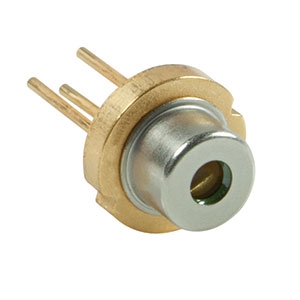
Includes a laser diode (L520P50 from Thorlabs), beam expander, iris (SM1D12C from Thorlabs), holographic diffuser, tapered light pipe, sandblasted glass diffuser, and CCD camera.
4:Experimental Procedures and Operational Workflow:
The laser beam is expanded, passed through an iris to adjust its diameter, then through ROEs and a holographic diffuser before entering a light pipe. Speckle patterns are captured and analyzed.
5:Data Analysis Methods:
Speckle contrast ratios are calculated from captured images to evaluate the effectiveness of speckle reduction.
独家科研数据包���,助您复现前沿成果����,加速创新突破
获取完整内容