研究目的
Investigating the application of optical coherence tomography (OCT) for qualitative assessment of laser transmission welding seams and spots in polymers and semiconductors, aiming to replace destructive testing with a non-destructive quality control method.
研究成果
OCT has the potential to be a versatile and powerful tool in non-destructive quality control and inline process control for laser joining processes in the polymer manufacturing industry. Novel light sources or multi-wavelength OCT approaches may address current limitations.
研究不足
The heat affect zone may not be totally detectable with OCT due to insidious changes in the refractive index. High scattering effects in reinforced polymers limit penetration depth. Metalized surfaces on semiconductors cannot be penetrated by wavelengths in the NIR or MIR region.
1:Experimental Design and Method Selection:
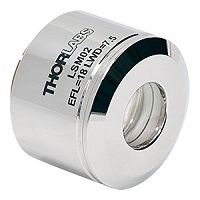
Utilized a commercially available swept source OCT System (OCS1300SS Thorlabs) for test measurements. The system's central wavelength is 1325 nm with a spectral bandwidth of 100 nm, providing an axial resolution of 12 μm in air and a transverse resolution of 15 μm with the build-in scan lens (LSM03 Thorlabs).
2:Sample Selection and Data Sources:
Samples included polymers, fiber reinforced plastics, and semiconductor devices produced or provided by cooperating groups within the Laser Zentrum Hannover.
3:List of Experimental Equipment and Materials:
OCS1300SS OCT System (Thorlabs), LSM03 scan lens (Thorlabs), balanced photodetector, k-clock for numerical k-space resampling, 14-bit digitizer, ImageJ for image processing.
4:Experimental Procedures and Operational Workflow:
Samples were placed on a stage below the scan lens. The field of view (FOV) was set to 6 x 6 x 3 mm3. The OCT signal was detected with a balanced photodetector, and the signal was evaluated with 'Thorlabs Swept Source OCT Imaging System' Version 2.3.
5:The OCT signal was detected with a balanced photodetector, and the signal was evaluated with 'Thorlabs Swept Source OCT Imaging System' Version Data Analysis Methods:
0.
5. Data Analysis Methods: Images were processed using ImageJ, applying maximum intensity projection (MIP), binarisation, median filter, and edge finding algorithms for the outlines of the welding seam.
独家科研数据包���,助您复现前沿成果���,加速创新突破
获取完整内容