研究目的
Investigating the dynamic characteristics of the spark channel plasma in a nitrogen trigatron using a laser Mach–Zehnder interferometer to understand the temporal and spatial evolution of plasma electron density and its implications for the stability and reliability of gas spark switches.
研究成果
The study successfully describes the development of the spark channel plasma in a nitrogen trigatron using a laser Mach–Zehnder interferometer. It highlights the differences in spatial distributions between anodic and cathodic plasma channels and the formation and merging of a secondary spark channel. The findings contribute to understanding the dynamic behavior of spark channel plasma and its implications for the stability and reliability of gas spark switches.
研究不足
The study is limited by the random jitter time of the gas breakdown, leading to nonuniform time intervals of the measured interferograms. Additionally, the theoretical models used for analysis, such as Braginskii's model, are only valid for currents that increase monotonously with time, which may not fully capture the dynamics during peak current periods.
1:Experimental Design and Method Selection:
The study employs a laser Mach–Zehnder interferometer to diagnose the plasma from a nitrogen trigatron, analyzing the electron density distribution by numerical processing of the interferogram.
2:Sample Selection and Data Sources:
A trigatron is placed in a chamber filled with
3:1-Mpa nitrogen gas, and part of the switch shell is removed for observation. List of Experimental Equipment and Materials:
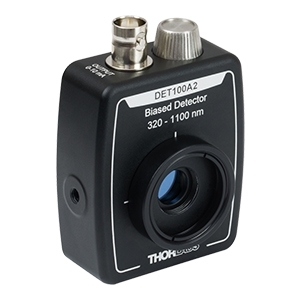
Includes a picosecond laser beam (EKSPLA, PL 2251 C-10-SH-FH-PreT, 30 ps, 532 nm), a charge-coupled device (CCD) for recording interferograms, a photodetector (DET10A, Thorlabs), and a digital delay generator (DG645) for synchronization.
4:Experimental Procedures and Operational Workflow:
The trigatron is triggered, and the breakdown process is observed and recorded using the interferometer setup. The probing moment is determined by a photodetector, and a narrow-band filter is used to eliminate plasma luminescence and stray light.
5:Data Analysis Methods:
The phase shift of the interference fringe is analyzed to calculate the electron density distribution, with Abel inversion based on the Fourier method applied for radial distribution analysis.
独家科研数据包����,助您复现前沿成果����,加速创新突破
获取完整内容