研究目的
To apply laser-induced breakdown spectroscopy (LIBS) for the depth-resolved identification of impurity deposited on EAST divertor tile and to analyze the erosion and deposition of plasma facing components (PFCs) in fusion devices.
研究成果
LIBS has been successfully applied for depth profiling analysis of impurity deposition on EAST divertor graphite tile. The technique demonstrated high sensitivity to detect impurity elements on PFCs in fusion devices, showing non-uniform deposition of impurities at various depths and positions on the tile surface. The results are important for long pulse H-mode plasma operation in EAST.
研究不足
The study is limited to the analysis of impurity deposition on a single graphite tile from the EAST lower divertor. The non-uniform impurity deposition and the effect of crater depth on LIBS intensity are noted as potential areas for optimization.
1:Experimental Design and Method Selection
LIBS was used for depth profile analysis of impurity deposition on the surface of a graphite tile removed from EAST lower divertor. The methodology included the use of a Q-switched Nd:YAG pulsed laser for ablation and a spectrometer for recording the plasma emission.
2:Sample Selection and Data Sources
The sample was a divertor graphite tile (9 × 5.9 × 2 cm3) taken from EAST in 2017, exposed to plasma discharges including different plasma configurations in the fusion reactor.
3:List of Experimental Equipment and Materials
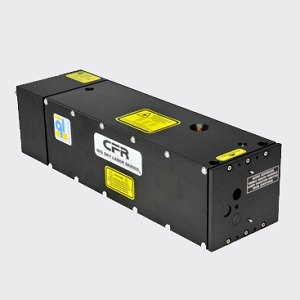
A Q-switched Nd:YAG pulsed laser (CFR200, Quantel), operating at a fundamental wavelength of 1064 nm, was used. The spectrometer, LIBS2500+ (Ocean Optics Inc., US), was used to record the plasma emission. The tile was placed on an xyz translational stage.
4:Experimental Procedures and Operational Workflow
The laser beam was focused onto the target surface, and the emission intensity from plasma was collected and guided to the spectrometer. The tile was ablated at 2 arrays of 8 spots along the y-axis, with each spot created by 100 successive laser shots.
5:Data Analysis Methods
The spectral lines of the different elements were identified using the NIST database. The intensity of spectral lines was plotted as a function of laser pulse number and against different positions on the tile surface for depth profile analysis.
独家科研数据包�����,助您复现前沿成果����,加速创新突破
获取完整内容