研究目的
Investigating the temperature dependent photoluminescence properties and exciton behaviors in two-dimensional halide perovskite materials.
研究成果
The 2D OIHP (PEA)2PbCl2Br2 synthesized by a facile solution self-assembled method shows white light emission at room temperature under UV excitation. The excitonic tunneling effect contributes to the unusual PL increasing of the STE in the range of 10 to 50 K. Extending the STE PL unusual increasing coverage to higher temperature range is a plausible method to enhance the room temperature PLQY of low dimensional OIHP.
研究不足
The study is limited to the specific 2D OIHP (PEA)2PbCl2Br2 material and its temperature dependent PL properties. The findings may not be directly applicable to other perovskite materials without further investigation.
1:Experimental Design and Method Selection:
The study involves synthesizing 2D OIHP (PEA)2PbCl2Br2 powder by solution assemble method and measuring its temperature dependent steady-state spectra to investigate the PL intensity relationship between the FE and STE.
2:Sample Selection and Data Sources:
The sample was prepared using 2-phenylethylamine hydrochloride (PEACl), lead bromide (PbBr2), and N,N-Dimethylformamide (DMF).
3:List of Experimental Equipment and Materials:
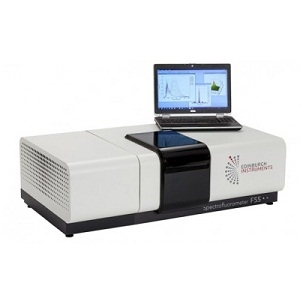
Fluorescence spectrometer (Edinburgh; FS5) attached with a temperature controlled system (Linkam HFS600E-PB2).
4:2).
Experimental Procedures and Operational Workflow:
4. Experimental Procedures and Operational Workflow: The mixed solution was stirred and heated, then added into toluene solution, filtered, washed, and dried. The emission spectra were tested under controlled temperature.
5:Data Analysis Methods:
The integrated intensity of FE and STE as a function of temperature was calculated and analyzed.
独家科研数据包,助您复现前沿成果���,加速创新突破
获取完整内容