研究目的
Investigating the spectral characteristics of underwater laser-induced breakdown spectroscopy (LIBS) as a function of pressure in the range of 0.1–45 MPa to understand the pressure effect on LIBS signals for deep-sea applications.
研究成果
The study demonstrates that pressure has a significant impact on the spectral characteristics of underwater LIBS, affecting both the peak intensity and line broadening. The findings suggest that pressure effect is a key factor to consider for the in-situ application of underwater LIBS in deep-sea, with implications for the design and optimization of deep-sea LIBS devices.
研究不足
The study is limited to the pressure range of 0.1–45 MPa and does not cover the full range of oceanic depths. The experimental setup may not fully replicate the complex conditions of deep-sea environments.
1:Experimental Design and Method Selection:
A high-pressure chamber was used to simulate the high-pressure environment of deep-sea. LIBS was employed to investigate the spectral characteristics under different pressures.
2:Sample Selection and Data Sources:
Water solutions made from CaCl2, NaCl, LiCl, and KCl dissolved in deionized water with concentrations of 2000 ppm Ca, 500 ppm Na, 500 ppm Li and 500 ppm K were used to get well-resolved spectral lines.
3:List of Experimental Equipment and Materials:
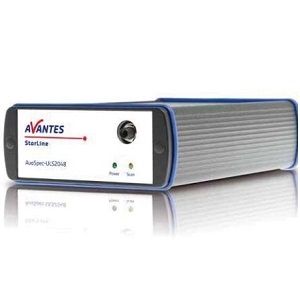
A Q-switched Nd:YAG laser (Beamtech Optronics, Dawa 200), a high-pressure chamber, a spectrometer (Avantes, Avaspec-ULS2048), and a delay generator (Stanford Research Systems, DG 535) were used.
4:Experimental Procedures and Operational Workflow:
The laser energy and detection delay were optimized under different pressure conditions. The impact of pressure on the peak intensity and line broadening of the observed spectra was studied.
5:Data Analysis Methods:
The peak intensity and line width were extracted using Lorentz fitting. The signal-to-noise ratios (SNRs) were calculated to evaluate the spectral quality.
独家科研数据包��,助您复现前沿成果,加速创新突破
获取完整内容