研究目的
To develop a dual-emission CdTe quantum dot@ZIF-365 ratiometric fluorescent sensor for highly sensitive detection of L-histidine and Cu2+.
研究成果
The CdTe@ZIF-365 hybrid material demonstrates high sensitivity and selectivity as a ratiometric fluorescent sensor for L-histidine and Cu2+. The study opens new avenues for environmental monitoring and biomedical applications, suggesting potential for further development in sensor technology.
研究不足
The study focuses on the detection of L-histidine and Cu2+ in controlled environments. The practical application in complex real-world samples may require further optimization. The sensitivity and selectivity are high but may be affected by the presence of other interfering substances.
1:Experimental Design and Method Selection:
The study employs a post-synthesis strategy to introduce CdTe quantum dots into ZIF-365, creating a hybrid material. TEM mappings and N2 absorption tests confirm the combination mode.
2:Sample Selection and Data Sources:
CdTe QDs and ZIF-365 are synthesized and characterized. The hybrid material's fluorescence properties are tested against various amino acids and metal ions.
3:List of Experimental Equipment and Materials:
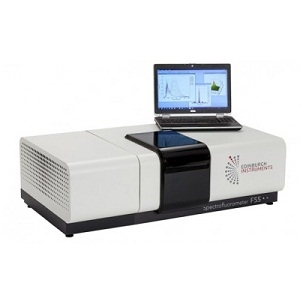
Includes D/Max-2500 X-ray diffractometer, Mepod V-1600PC spectrophotometer, Fluorolog-3 Fluorescence Spectrophotometer, and FS5 Fluorescence Spectrometer.
4:Experimental Procedures and Operational Workflow:
The hybrid material is tested for its fluorescence response to L-histidine and Cu2+ in controlled conditions.
5:Data Analysis Methods:
Fluorescence quenching efficiency is calculated using the Stern-Volmer equation to determine sensitivity and selectivity.
独家科研数据包,助您复现前沿成果,加速创新突破
获取完整内容