研究目的
Investigating the effect and control of laser heat treatment parameters to optimize the mechanical behavior of an AISI 4340 steel cylindrical standard-specimen.
研究成果
Laser heat treatment can significantly improve the mechanical properties of AISI 4340 steel, including fatigue endurance limit for a lifetime up to 5 times higher. This is due to a high surface hardness that prevents the breaking of atomic bonds that can create free surface and thus spread the micro-cracks. The main findings and results of this study can be used in practice by the laser heat treatment industry and by mechanical part designers.
研究不足
The technical and application constraints of the experiments include the need for a 2nd order control function of laser power for a wide uniform distance of case depth (greater than 80-mm), and studying the impact of torsion torque combined with the normal tensile effect on the fatigue life.
1:Experimental Design and Method Selection:
The methodology proposed to analyze the mechanical behavior is built progressively by the development of a numerical model of prediction of the profile of temperature and the case depth, the development of a laser power adjustment function for a uniform depth of transformation along the longitudinal axis of the cylinder, presentation of the experimental setup, the experimental design and the results of the static and fatigue mechanical tests (hysteresis loops), an analysis of variance, an RSM representation of the results of the mechanical tests and a proposition of a predictor based on the predictive power of neural networks, and analysis discussion of numerical results and visualization of the microstructure and the fracture surface.
2:Sample Selection and Data Sources:
Specimens of dimensions corresponding to ASTM E8 standard were carefully prepared and machined after laser heat treatment.
3:List of Experimental Equipment and Materials:
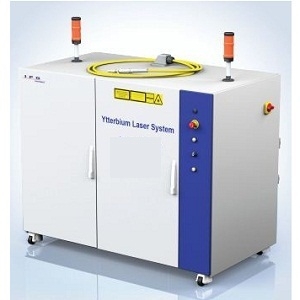
A robotic laser heat treatment cell equipped with an industrial robot FANUC M710iC/70, a fiber laser system (IPG YLS-3000-ST2), a FLIR A325sc infrared thermal imaging camera, and an automatic tensile testing machine (MTS 810 Material Test System) were used.
4:Experimental Procedures and Operational Workflow:
The path of the laser beam was programmed so that it is in focus relative to the outer surface of the cylinder. The rotational speed of the cylinder is fixed, and the scanning speed of the laser beam and the laser power are controllable parameters.
5:Data Analysis Methods:
An analysis of variance, an RSM representation of the results of the mechanical tests and a proposition of a predictor based on the predictive power of neural networks were used.
独家科研数据包����,助您复现前沿成果����,加速创新突破
获取完整内容