研究目的
Investigating the use of E.coli B40 bacteria as receptors on localized surface plasmon resonance (LSPR) based biosensor for sensing heavy metal ions viz. mercury (Hg2+) and cadmium (Cd2+) in water.
研究成果
The developed biosensor utilizing wild type E.coli B40 bacteria as receptors demonstrated high sensitivity and selectivity for detecting Hg2+ and Cd2+ ions at concentrations as low as 0.5 ppb, below WHO and USEPA limits. The sensor offers a fast, cost-effective method for heavy metal ion detection in water samples.
研究不足
The sensor may not differentiate between heavy metal ions if they are present as a mixture in the sample. Non-specific interactions due to free polyelectrolyte surface could influence the total response.
1:Experimental Design and Method Selection:
The study utilized LSPR based fiber-optic biosensor with E.coli B40 bacteria as receptors for heavy metal ion detection.
2:Sample Selection and Data Sources:
E.coli B40 bacteria were immobilized on gold nanoparticles (AuNP) coated fiber-optic probes.
3:List of Experimental Equipment and Materials:
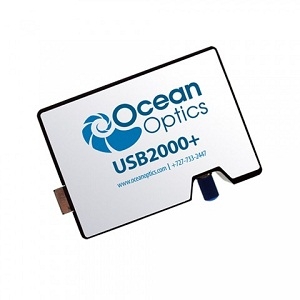
Gold nanoparticles, polyelectrolytes (PAH, PSS), heavy metal ion solutions, fiber-optic probes, LED light source, spectrometer.
4:Experimental Procedures and Operational Workflow:
Immobilization of bacteria on AuNP coated probes, exposure to heavy metal ions, measurement of absorbance changes.
5:Data Analysis Methods:
Absorbance changes were monitored using a portable spectrometer and analyzed for heavy metal ion detection.
独家科研数据包,助您复现前沿成果����,加速创新突破
获取完整内容