研究目的
Investigating the capability of a microcavity in-line Mach-Zehnder interferometer for selective label-free biosensing of live E. coli C3000 bacteria using MS2 bacteriophages as recognition elements.
研究成果
The μIMZI-based biosensor demonstrated high specificity and sensitivity for detecting live E. coli C3000 bacteria, with a detection limit as low as 100 CFU/mL. The sensor's ability to monitor biological phenomena in real-time and its high refractive index sensitivity make it a promising tool for biosensing applications.
研究不足
The study focuses on live E. coli C3000 bacteria and may not be directly applicable to other bacterial strains without further modification of the recognition elements.
1:Experimental Design and Method Selection
The study utilized a microcavity in-line Mach-Zehnder interferometer (μIMZI) fabricated in a single-mode fiber by femtosecond laser micromachining. Chemical surface treatment was applied to ensure detection specificity.
2:Sample Selection and Data Sources
Live E. coli C3000 bacteria and MS2 bacteriophages were used as biological samples. The sensor's response to different concentrations of live E. coli was measured.
3:List of Experimental Equipment and Materials
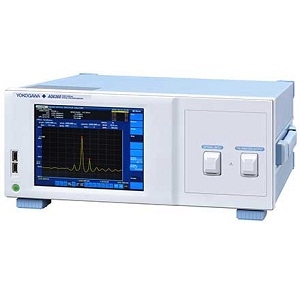
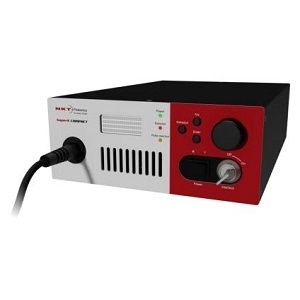
Femtosecond laser for micromachining, NKT Photonics SuperK COMPACT supercontinuum white light source, Yokogawa AQ6370C optical spectrum analyzer, digital refractometer VEE GEE PDX-95.
4:Experimental Procedures and Operational Workflow
The μIMZI was functionalized with MS2 bacteriophages and exposed to different concentrations of live E. coli C3000. The transmission spectra were monitored in real-time.
5:Data Analysis Methods
The spectral shifts of the transmission minima were analyzed to determine the sensor's response to bacterial concentrations.
独家科研数据包,助您复现前沿成果��,加速创新突破
获取完整内容