研究目的
Investigating the solvent-dependent sensitization of ytterbium and neodymium via an intramolecular excimer.
研究成果
The study demonstrates that the NIR-emission of neodymium and ytterbium can be obtained through ligand-centered sensitization from a ligand possessing a di(1-pyrenyl) moiety. The sensitization is solvent-dependent and correlates with the presence of an excimer-like emission. The sensitization was found to be more efficient with the anionic ligands, and energy transfer was more efficient with ytterbium than neodymium. The results open the possibility of associating well-known pyrene-containing materials or sensors with lanthanides, which could lead to new luminescent materials or enhanced NIR detection.
研究不足
The study is limited by the weak binding strength of the phosphine oxide and carbonyl moiety of the ligand to lanthanides, which can be displaced by polar coordinating solvents, thus shutting down sensitization. Additionally, the presence of a high number of C-H oscillators in the sensitizing ligand may decrease lanthanide luminescence quantum yields.
1:Experimental Design and Method Selection:
The study involved the synthesis of a di(1-pyrenyl)-phosphoryl acetophenone ligand and its coordination with neodymium and ytterbium. The methodology included the use of NMR spectroscopy, mass spectrometry, elemental analysis, and infrared spectroscopy for characterization.
2:Sample Selection and Data Sources:
The ligands and their lanthanide complexes were synthesized and characterized. The emission spectra were collected in various solvents.
3:List of Experimental Equipment and Materials:
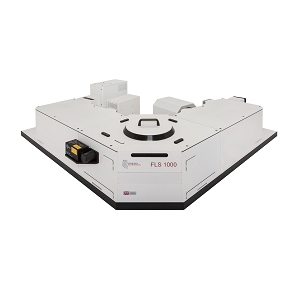
Bruker AVANCE 300 MHz or 400 MHz NMR spectrometers, Duetta fluorescence and absorbance spectrometer, FLS1000 fluorimeter, integration sphere for quantum yield measurements.
4:Experimental Procedures and Operational Workflow:
The synthesis of ligands and their complexes, followed by characterization using various spectroscopic techniques and emission studies in different solvents.
5:Data Analysis Methods:
The emission spectra were analyzed to determine the solvent-dependent sensitization of the lanthanides.
独家科研数据包,助您复现前沿成果����,加速创新突破
获取完整内容