研究目的
To evaluate different methods for camera color calibration in a moving image acquisition system to determine the most robust end-to-end framework for truthful color reproduction in printing applications.
研究成果
The modified 3D LUT method performs best overall, with the lowest mean color difference and highest percentage of colors within acceptable thresholds. However, LUT 3D is better for lighter, high-chromaticity colors, while LUT 2.5D excels for darker, low-chroma colors. This suggests that a hybrid LUT approach could improve robustness. The framework provides a complete pipeline for color correction in non-laboratory settings, but future work should address gamut coverage and hybrid methods for enhanced accuracy.
研究不足
The study is constrained by the specific acquisition conditions, including small working distance and non-uniform illumination. The calibration relies on a limited set of 928 color patches, which may not cover the entire gamut comprehensively. Over-fitting can occur with higher-degree polynomial models, and LUT methods require large ground truth data, which is not always available with standard color charts like Macbeth ColorChecker. Performance varies with color lightness and chromaticity, indicating a need for further optimization.
1:Experimental Design and Method Selection:
The study involves testing various color mapping methods, including linear, polynomial, root-polynomial, cube-root polynomial LSA, HPCC, and LUT-based methods, with modifications for specific application needs. The goal is to find the best transformation from camera RGB to CIELAB color space under fixed acquisition conditions.
2:Sample Selection and Data Sources:
An IT8/
3:3 CMYK calibration target with 928 color patches is used for calibration. Evaluation is done using three test targets:
IT8/7.4 CMYK chart (1,620 colors), IT8/7.3 CMYK chart page 1 (468 colors), and IT8/7.3 CMYK chart page 2 (460 colors), totaling 2,548 colors. Spectral measurements are taken with a spectrophotometer for ground truth data.
4:4 CMYK chart (1,620 colors), IT8/3 CMYK chart page 1 (468 colors), and IT8/3 CMYK chart page 2 (460 colors), totaling 2,548 colors. Spectral measurements are taken with a spectrophotometer for ground truth data.
List of Experimental Equipment and Materials:
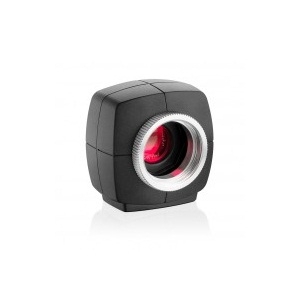
3. List of Experimental Equipment and Materials: Camera: UI-1490LE-C-HQ by iDS; Illumination: Two tungsten lamps; Calibration Target: IT8/7.3 CMYK target; Spectrophotometer: X-Rite i1Pro; Software: MATLAB for image processing and analysis.
5:3 CMYK target; Spectrophotometer:
4. Experimental Procedures and Operational Workflow: Images are captured using the camera and lamps, processed through a pipeline including demosaicing, flat-field correction, optical distortion removal, and perspective bias correction. Color calibration methods are applied to the processed images, and results are evaluated based on color difference metrics (CIE ΔE00).
6:Experimental Procedures and Operational Workflow:
5. Data Analysis Methods: Data is analyzed using mean, median, maximum color differences, and percentile ranks for thresholds (ΔE00 ≤ 2 and ≤5). MATLAB is used for calculations and statistical analysis.
独家科研数据包,助您复现前沿成果�,加速创新突破
获取完整内容