研究目的
To propose a large lateral core-offset in-line fiber modal interferometer for refractive index sensing, avoiding the relative direction of the two core-offset joints affecting interference performance, and to improve RI sensitivity compared to small core-offset interferometers.
研究成果
The large core-offset in-line fiber modal interferometer significantly improves RI sensitivity from 43.97 to 123.40 nm/RIU by suppressing core-cladding interference and enhancing cladding mode interference, without requiring strict alignment of core-offset joints. It offers a cost-effective, high-sensitivity solution for RI sensing with simple fabrication.
研究不足
The study may have limitations in terms of the range of RI tested (1.33 to 1.37), potential temperature and stability effects during measurements, and the need for precise fabrication control despite the simplified approach. Optimization could involve exploring higher core-offset displacements or different fiber types.
1:Experimental Design and Method Selection:
The study involved designing and fabricating in-line fiber modal interferometers with different core-offset displacements (6 μm and 40 μm) and arm lengths (30, 50, 70, 100 mm) using a fusion splicer. The principle was based on mode coupling and interference between core and cladding modes or within cladding modes, with simulations and experiments conducted to evaluate refractive index (RI) sensing performance.
2:Sample Selection and Data Sources:
Commercial single-mode silica fiber (G652D) was used. RI sensing was tested with glycerin solutions of varying concentrations (RIs from 1.33 to 1.37), measured using an Abbe refractometer.
3:33 to 37), measured using an Abbe refractometer.
List of Experimental Equipment and Materials:
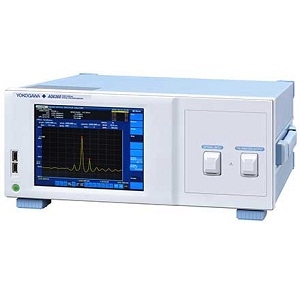
3. List of Experimental Equipment and Materials: Equipment included a fusion splicer (Fujikura 80S), broad band optical source (BBS: Opeak 1550 nm), optical spectrum analyzer (OSA: YOKOGAWA AQ6370D), and Abbe refractometer. Materials included G652D SMF and glycerin solutions.
4:Experimental Procedures and Operational Workflow:
Fabricate interferometers by splicing fibers with specified core-offsets. Immerse sensors in glycerin solutions, launch light from BBS into the fiber, and record transmission spectra using OSA. Measure RI changes and wavelength shifts of interference dips.
5:Data Analysis Methods:
Analyze transmission spectra to determine wavelength shifts of interference dips. Calculate RI sensitivity using derived equations, and perform linear regression on data to assess performance.
独家科研数据包��,助您复现前沿成果����,加速创新突破
获取完整内容