研究目的
To develop a novel high-efficiency Mn4+-activated BaLaMgSbO6 far-red-emitting phosphor for indoor plant growth lighting applications.
研究成果
The BLMS:Mn4+ phosphors exhibit high efficiency with an IQE of 83%, optimal doping at 0.6 mol%, and good thermal stability, making them promising for far-red LEDs in plant growth lighting. The nonradiative energy transfer mechanism was identified, and a functional LED device was demonstrated.
研究不足
The study is limited to the synthesis and characterization of BLMS:Mn4+ phosphors; practical applications in commercial LED devices may require further optimization for stability, cost, and scalability. The thermal quenching, while good, still shows intensity reduction at higher temperatures.
1:Experimental Design and Method Selection:
A high-temperature solid-state reaction method was used to synthesize BaLaMgSb1-xO6:xMn4+ phosphors with varying Mn4+ concentrations. The method was chosen for its ability to produce crystalline materials with controlled doping.
2:Sample Selection and Data Sources:
Samples were prepared with x = 0.2, 0.4, 0.6, 0.8, 1.0, and 1.2 mol% Mn4+ using raw materials BaCO3, La2O3, MgO, Sb2O5, and MnCO3. Data were collected from XRD, PL, PLE, decay curves, IQE measurements, and temperature-dependent PL spectra.
3:2, 4, 6, 8, 0, and 2 mol% Mn4+ using raw materials BaCO3, La2O3, MgO, Sb2O5, and MnCOData were collected from XRD, PL, PLE, decay curves, IQE measurements, and temperature-dependent PL spectra.
List of Experimental Equipment and Materials:
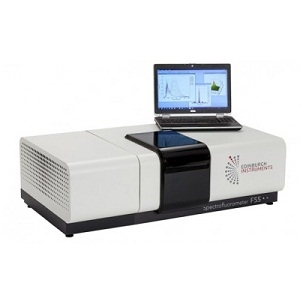
3. List of Experimental Equipment and Materials: Equipment included a Bruker D8 X-ray diffractometer with Cu Kα radiation, an Edinburgh FS5 spectrometer with a Xenon lamp and integrating sphere, and a temperature controlling system. Materials were analytical reagent grade chemicals.
4:Experimental Procedures and Operational Workflow:
Raw materials were weighed, ground, heated at 600°C for 3 hours, reground, sintered at 1500°C for 6 hours, cooled to room temperature, and ground again to fine powders. Characterization involved XRD for structure, PL and PLE for optical properties, decay curves for lifetimes, IQE measurement with an integrating sphere, and temperature-dependent PL from 303 to 463 K.
5:Data Analysis Methods:
XRD patterns were analyzed for phase purity and Rietveld refinement. PL spectra were deconvoluted using Gaussian fits. Concentration quenching was analyzed using equations for critical distance and multipolar interactions. Lifetimes were fitted with exponential decay equations. Thermal quenching activation energy was calculated using an Arrhenius-type equation. IQE was calculated from emission and excitation spectra.
独家科研数据包��,助您复现前沿成果��,加速创新突破
获取完整内容