研究目的
The goal of this work is to provide a comprehensive analysis of the degradation mechanisms that affect the performance of InAs QD LDs during operation.
研究成果
The experimental evidence collected within this paper can be explained by considering that stress promotes the generation/propagation of defects toward the active region of the devices through a diffusion process. As defects relocate in proximity of the active layers, they start acting as efficient non-radiative recombination centers, thus reducing the optical emission in the sub-threshold regime and increasing the threshold current of the device.
研究不足
The study focuses on the degradation mechanisms under constant-current stress and may not cover all operational conditions or failure modes.
1:Experimental Design and Method Selection:
The samples were submitted to constant-current stress tests to monitor the optical (L-I, EL spectra) and electrical (I-V) characteristics during stress.
2:Sample Selection and Data Sources:
State-of-the-art InAs quantum-dot laser diodes epitaxially grown by MBE on GaP-on-silicon substrates were used.
3:List of Experimental Equipment and Materials:
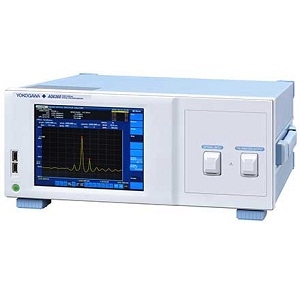
A Keysight B2912A source-meter for electrical characterization and a Yokogawa AQ6370D Optical Spectrum Analyzer (OSA) for optical measurements.
4:Experimental Procedures and Operational Workflow:
Stress and characterization were carried out at a fixed baseplate temperature of TAMB= 35 °C.
5:Data Analysis Methods:
The variation of the optical and electrical characteristics was analyzed to identify degradation mechanisms.
独家科研数据包��,助您复现前沿成果�����,加速创新突破
获取完整内容