研究目的
Investigating the development of a widely tunable single longitudinal mode erbium-doped fiber laser based on a microfiber knot resonator for applications in sensing, optical instrument testing, and optical communications.
研究成果
The study successfully demonstrates a widely tunable SLM erbium-doped fiber laser based on a MKR, capable of tuning from 1545 to 1565 nm with a high side-mode suppression ratio of 55 dB. This simple and novel all-fiber laser source has potential applications in sensing, optical instrument testing, and optical communications.
研究不足
The laser's tunable range is limited to 1545 ~ 1565 nm, beyond which it cannot achieve SLM output. The system's complexity and the need for precise control of the MKR's fabrication and positioning may also pose challenges.
1:Experimental Design and Method Selection:
The study employs a microfiber knot resonator (MKR) as the longitudinal mode selecting component within a fiber laser setup to achieve single longitudinal mode (SLM) operation. The MKR is fabricated using a flame brushing technique to taper standard SMF to about 5 μm, then manually tied into a knot.
2:Sample Selection and Data Sources:
The setup includes a 974 nm pump laser diode, a 980/1550 nm wavelength division multiplexer, erbium-doped fiber (EDF1, Nufern) with a length of 5 m, an isolator, a polarization controller, an optical tunable filter (OTF, santec-320), an un-pumped EDF2 length of
3:3 m, and a
10 fiber coupler.
4:List of Experimental Equipment and Materials:
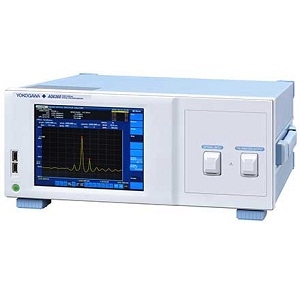
Equipment includes a Yokogawa AQ6370C optical spectrum analyzer and a Rohde & Schwarz FSV30 frequency spectrum analyzer.
5:Experimental Procedures and Operational Workflow:
The MKR is incorporated into the cavity to select longitudinal modes, with an un-pumped EDF2 used to suppress mode competition. The laser's spectral and frequency properties are monitored.
6:Data Analysis Methods:
The laser's performance is evaluated based on its tuning range, side-mode suppression ratio, and stability.
独家科研数据包,助您复现前沿成果�����,加速创新突破
获取完整内容