研究目的
To propose a computational method for determining the UV fluence rate inside a Petri dish using the available information on a LED’s datasheet, facilitating the design of UV-LED reactors for water disinfection.
研究成果
The computational method proposed in this study accurately predicts the fluence rate inside a Petri dish for microbial inactivation studies, regardless of LED position, radiation profile, or container geometry. The method eliminates the need for experimental data and conventional correction factors, offering a reliable approach for UV-LED reactor design and evaluation.
研究不足
The study acknowledges the challenges in measuring fluence rate inside a solution and the need for accurate modeling to predict fluence rate without direct measurement. The method's accuracy depends on the availability of the LED’s radiation profile and radiant power from the datasheet.
1:Experimental Design and Method Selection:
The study involved modeling UV-LED as a polychromatic point source with a specific radiation profile and calculating the fluence rate by solving the Radiative Transfer Equation, considering refraction, reflection, and absorption of the medium.
2:Sample Selection and Data Sources:
Microbial inactivation studies were conducted using E. coli and MS2 in Petri dishes with internal diameters of 5 cm and 9 cm.
3:List of Experimental Equipment and Materials:
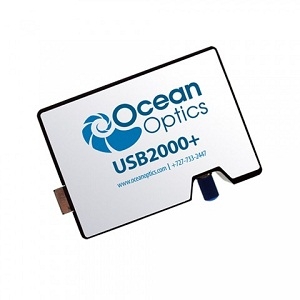
UV-LEDs with peak wavelengths of 265 nm and 275 nm, spectroradiometer (Ocean Optics USB 2000+ UV/Vis), cosine corrector diffuser (CC-3-UV-S, Ocean Optics), and actinometry solution.
4:Experimental Procedures and Operational Workflow:
Radiometry and actinometry measurements were conducted to evaluate irradiance and fluence rate predictions. Biodosimetry tests were performed to measure the fluence rate delivered to microbial suspensions.
5:Data Analysis Methods:
The fluence rate was calculated using the LED’s relative radiation profile and radiant power, with comparisons made between simulated and experimental data.
独家科研数据包���,助您复现前沿成果��,加速创新突破
获取完整内容