研究目的
To study the mass transport and heat transfer in the melt pools in high deposition rate (HDR) L-DED of 316L stainless steel and to develop a three-dimensional numerical model for this process.
研究成果
A three-dimensional numerical model has been developed to investigate the thermal behaviour and mass transport in an HDR L-DED process. The modified mass source model in this study shows adaptability to represent the discrete and non-uniform distributed filler powders. The melt pool geometry and deposited track dimension can be predicted using this model. Agreements were obtained between the simulated and experimental results.
研究不足
The models for solidification microstructure in this study are analytical models which were coupled with the developed numerical model. It presents an insight into the influence of the heat transfer and fluid flow on the solidification microstructure in the melt pool in an HDR-L-DED process. The microstructural models used in this study are simple and they require a relatively low computation effort, and only PDAS is predicted. However, the present models are limited to predicting the dendrite shape and the second dendrite arm spacing only.
1:Experimental Design and Method Selection
A three-dimensional numerical model was established using the Volume of Fluid (VOF) method to track the melt pool free surfaces and the enthalpy-porosity method to model the solid-liquid phase change. A discrete powder source model was developed considering the non-uniform powder feed rate distribution.
2:Sample Selection and Data Sources
Stainless steel (SS) 316L powder was deposited on SS 316L flat sheets. The chemical composition of SS 316L was provided.
3:List of Experimental Equipment and Materials
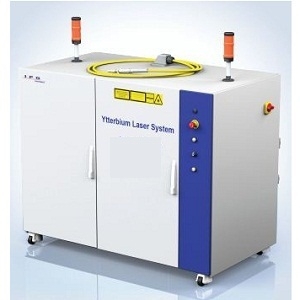
An IPG YLS-16000 continuous wave (CW) fibre laser, a coaxial powder deposition head (PRECITEC), a powder feeder (SULZER METCO TWIN 10-C), and a Phantom Miro 4 camera were used.
4:Experimental Procedures and Operational Workflow
Experiments were carried out using a coaxial HDR L-DED system. The laser beam was delivered to the collimating and focusing lenses through an optical fibre. The motion of the deposition head was controlled with a 6-axis KUKA robot.
5:Data Analysis Methods
The cross-section of the deposited track was examined with a digital microscope (Keyence VHX-5000). The melt pool morphology was captured during the deposition process.
独家科研数据包�����,助您复现前沿成果����,加速创新突破
获取完整内容